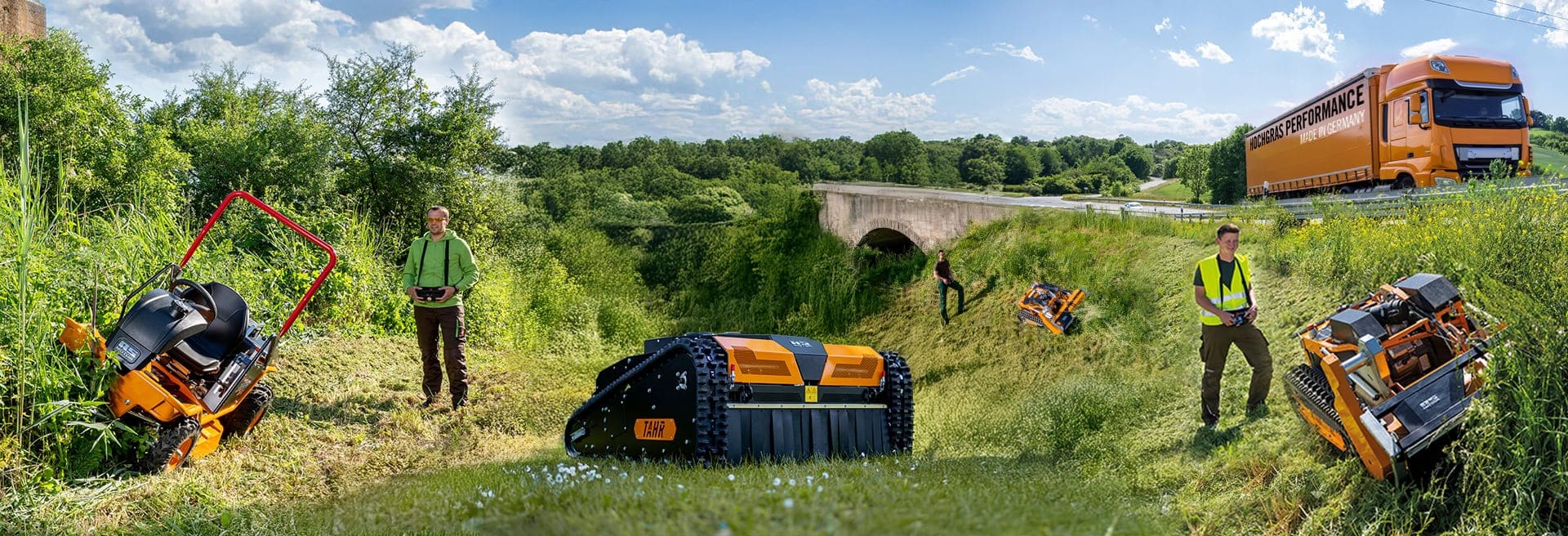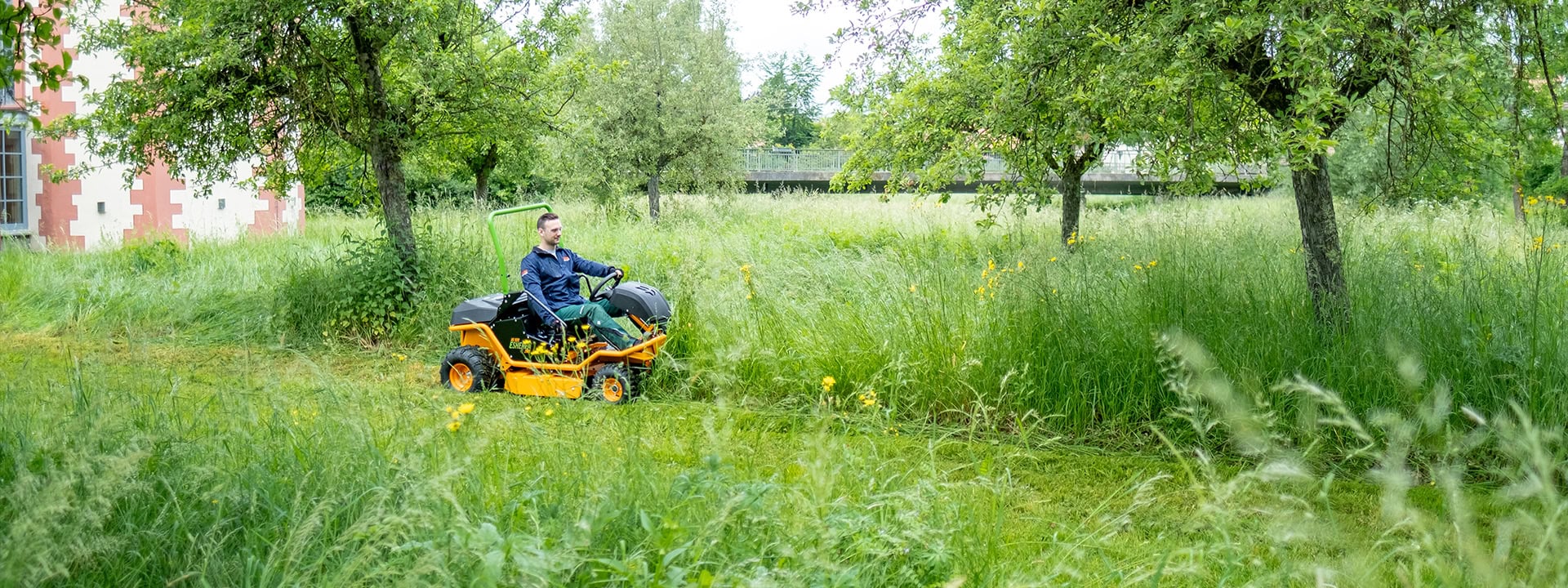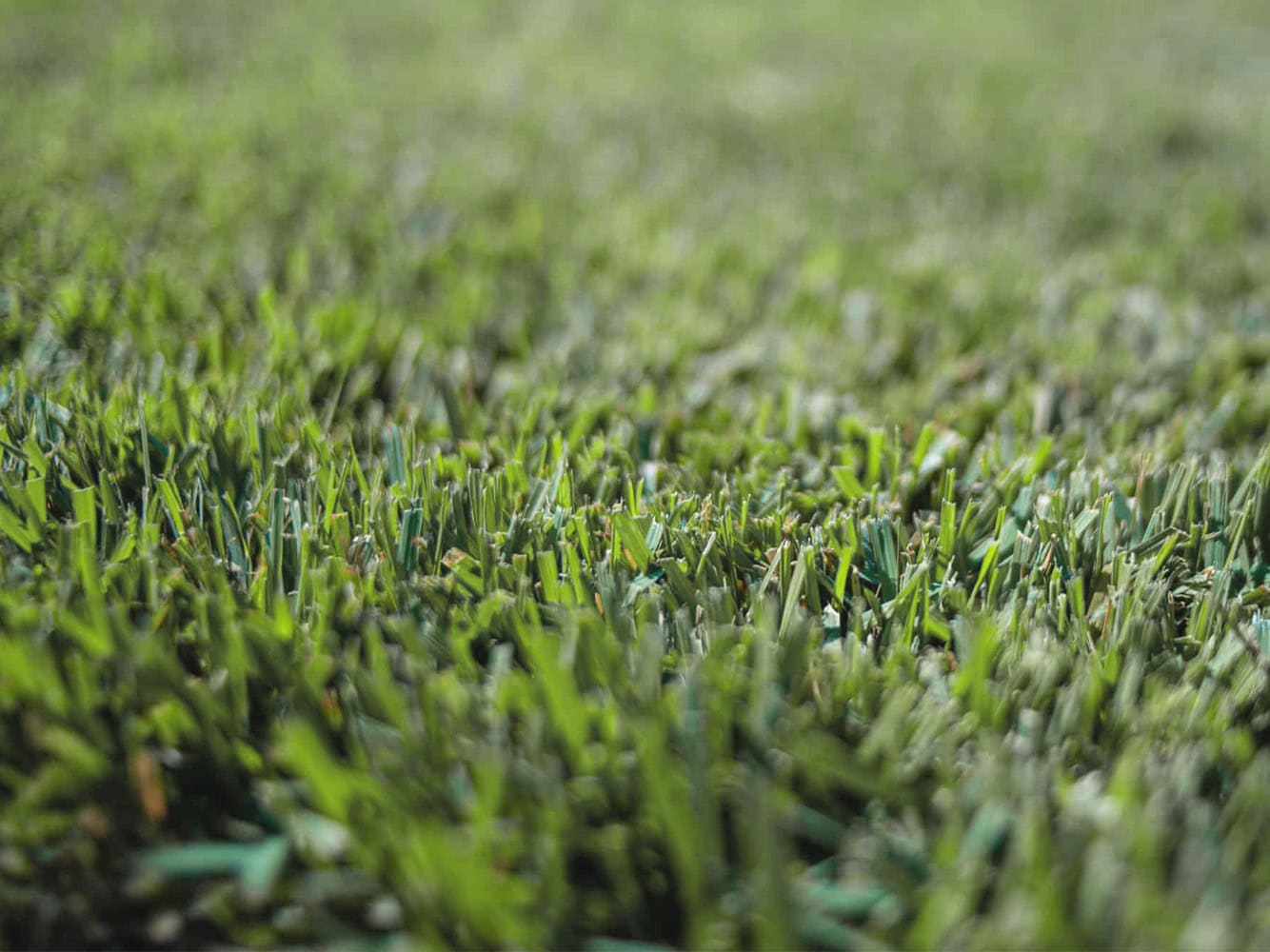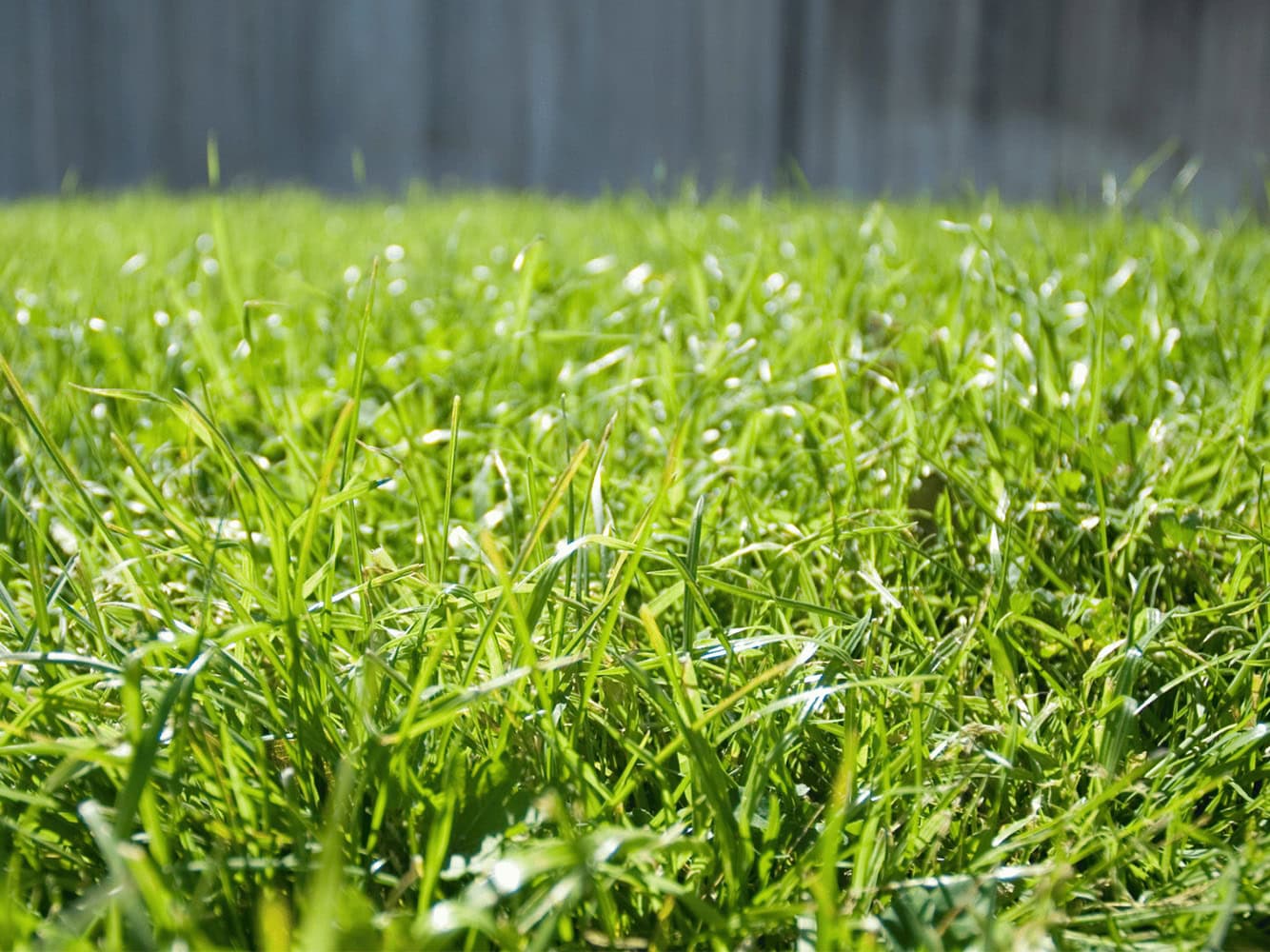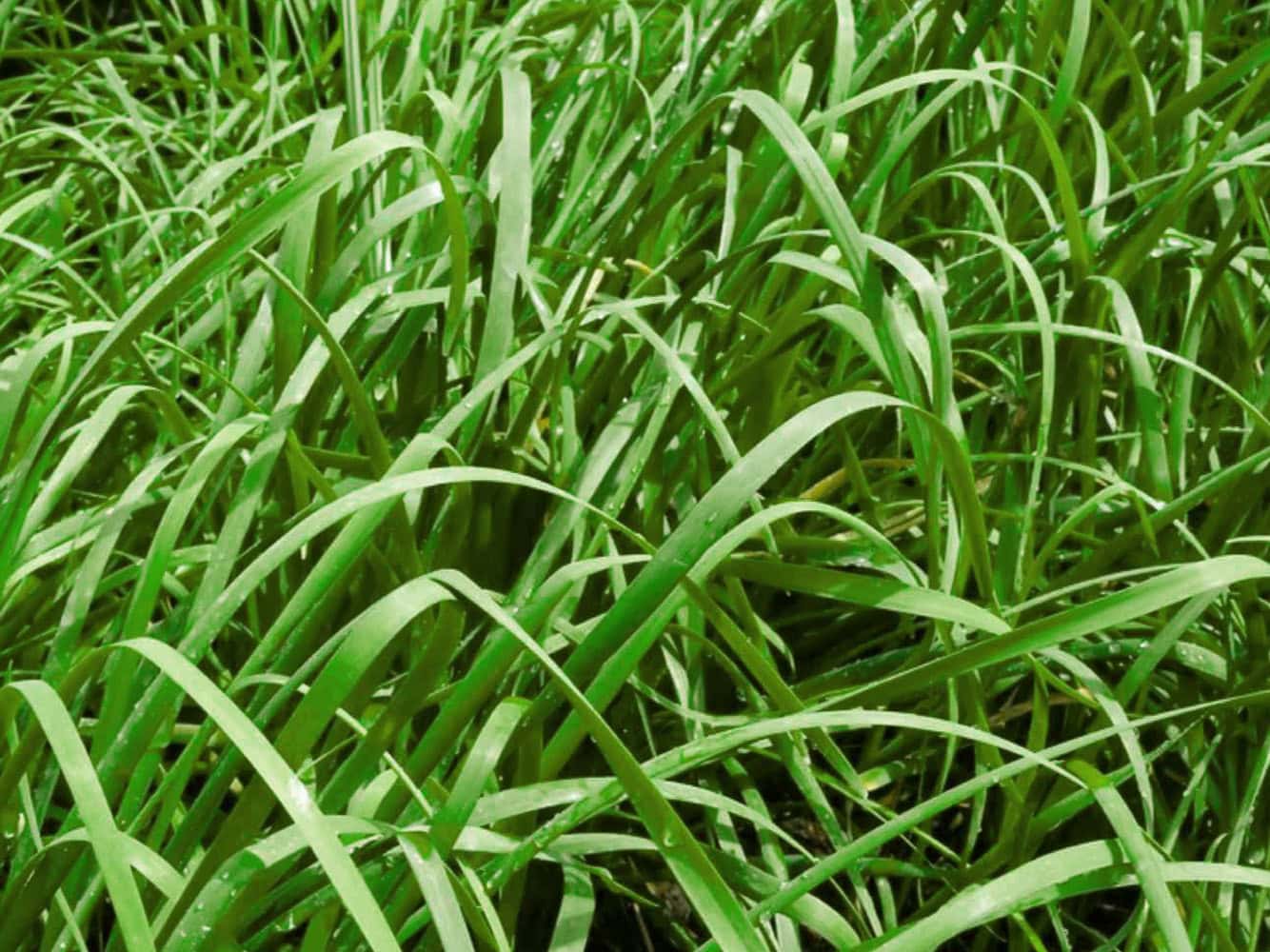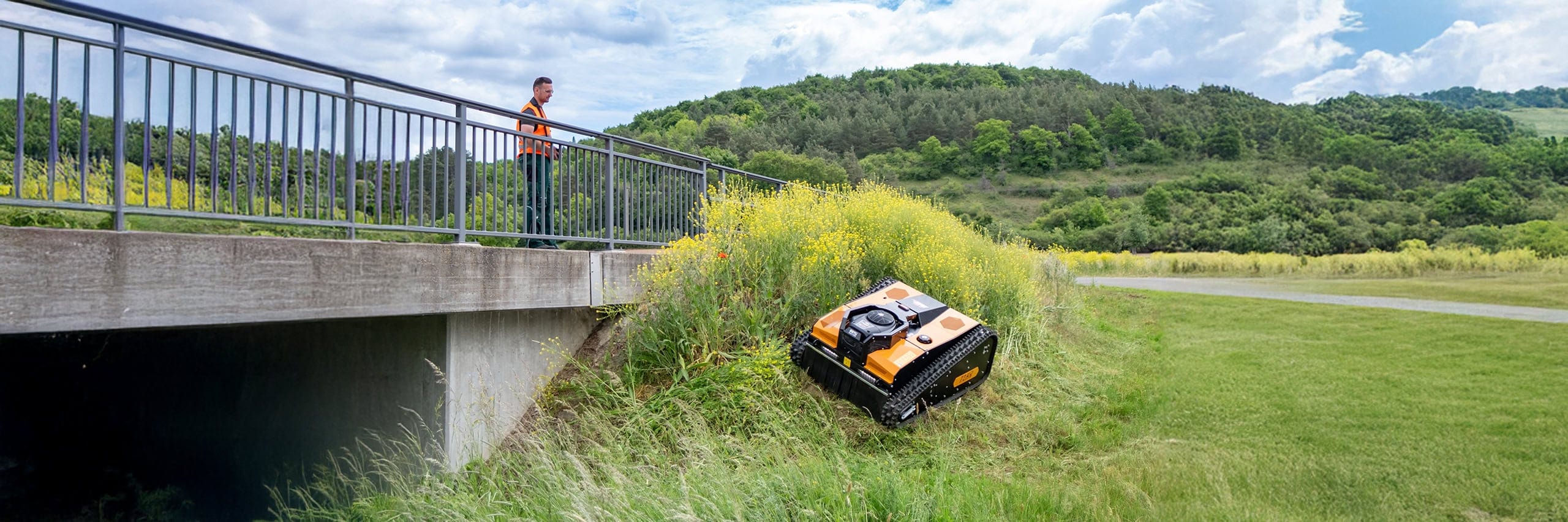
Expert Case Study: AS 990 Tahr RC – Mowing Without Turning

When Efficiency Becomes Safety

Steep embankments, long slopes, difficult terrain – here, it’s not just engine power that matters, but how intelligently it is used. The AS 990 Tahr RC stands for exactly this principle: maximum area performance with minimal risk.
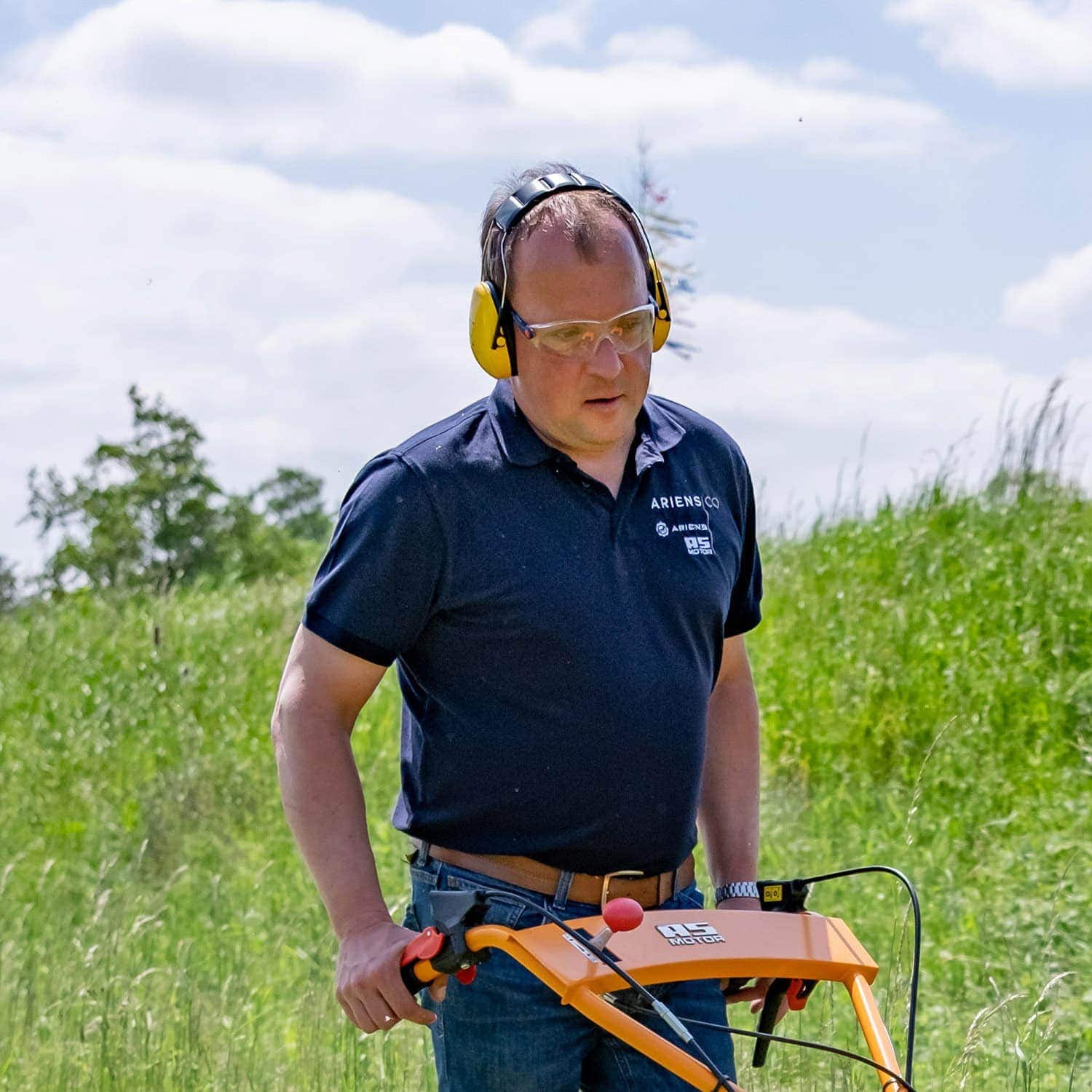
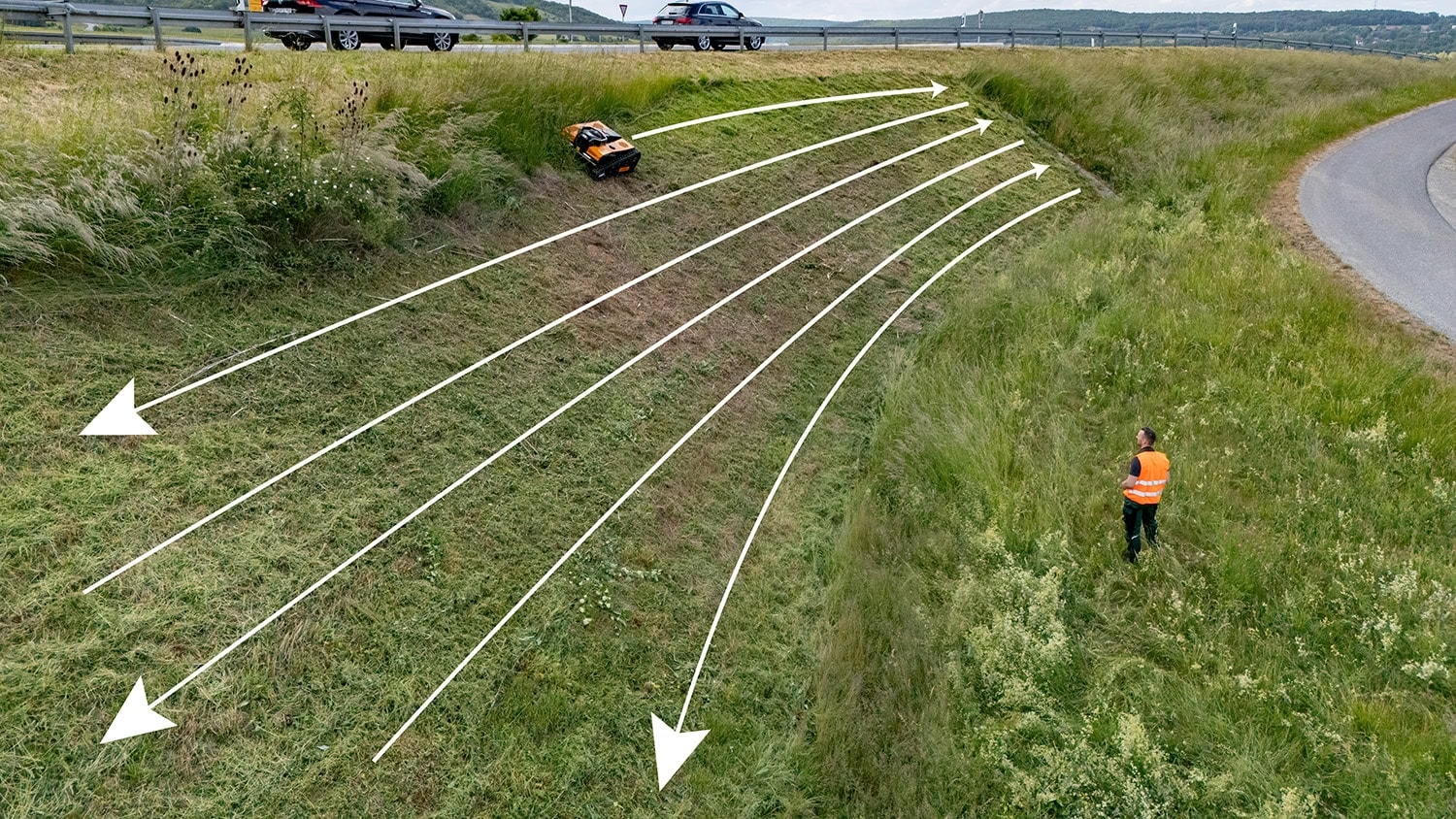
Its concept – two-sided mowing without turning – not only saves time but fundamentally changes how professionals think about safe steep slope maintenance.

This expert report is aimed at municipalities, service providers and infrastructure operators who need to maintain long, steep slopes efficiently, gently and safely.

Roman Mühleck, Product Marketing Manager at AS-Motor:

“The Tahr RC is not an ordinary mower. It was developed to solve a real problem – namely the time and risk involved in turning on slopes.”

Mowing in Both Directions – The Technology Behind It

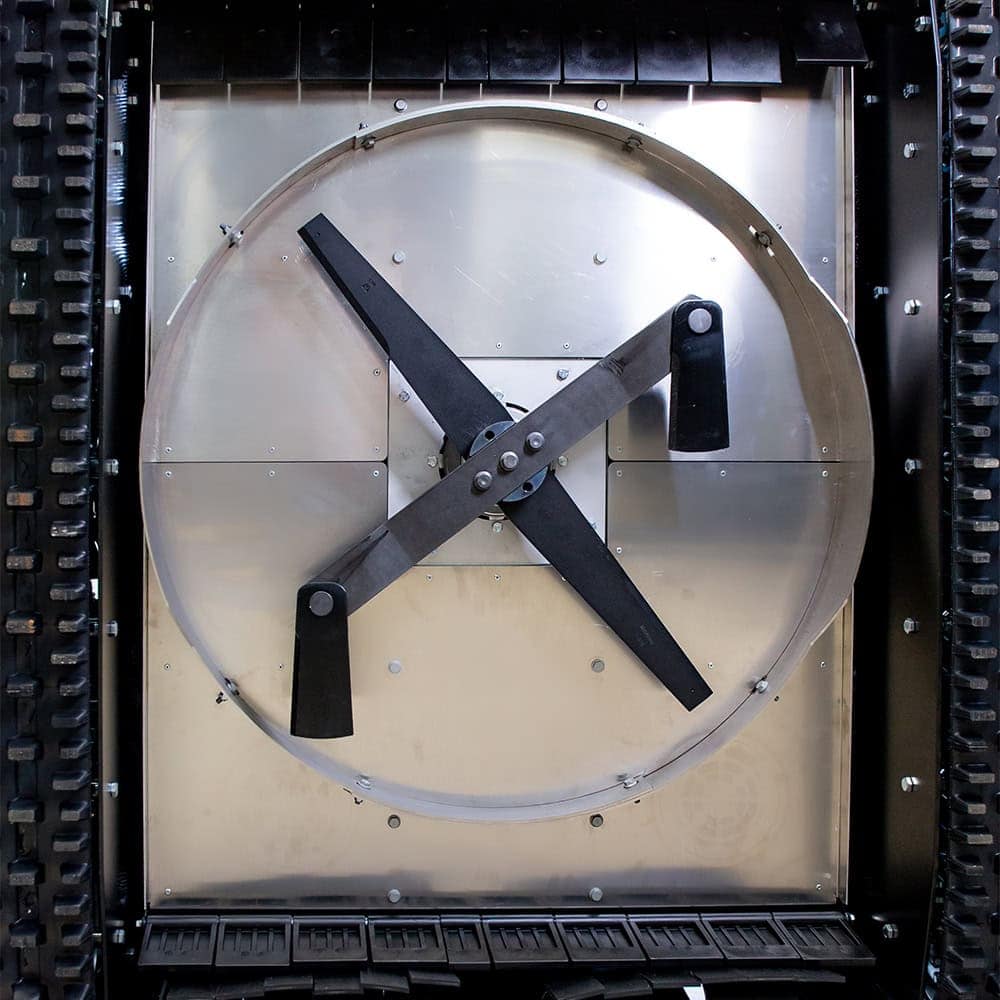
Conventional remote-controlled mowers have to turn after each pass. Especially in extreme slope conditions, this moment is critical – risk of slipping, loss of time and increased wear are the consequences. The AS 990 Tahr RC solves this problem with a symmetrical rotary mower that delivers the same precise cut forwards and backwards.

What sounds technically simple has massive implications for safety, soil protection and area performance in practice.

On long, linear areas, the operator saves up to 30% working time, avoids dangerous turning maneuvers and reduces the strain on man and machine.

Roman Mühleck: “If a slope is 200 meters long, why should you have to keep turning? The Tahr drives, mows – and remains stable.”
Slope Capability That Inspires Confidence

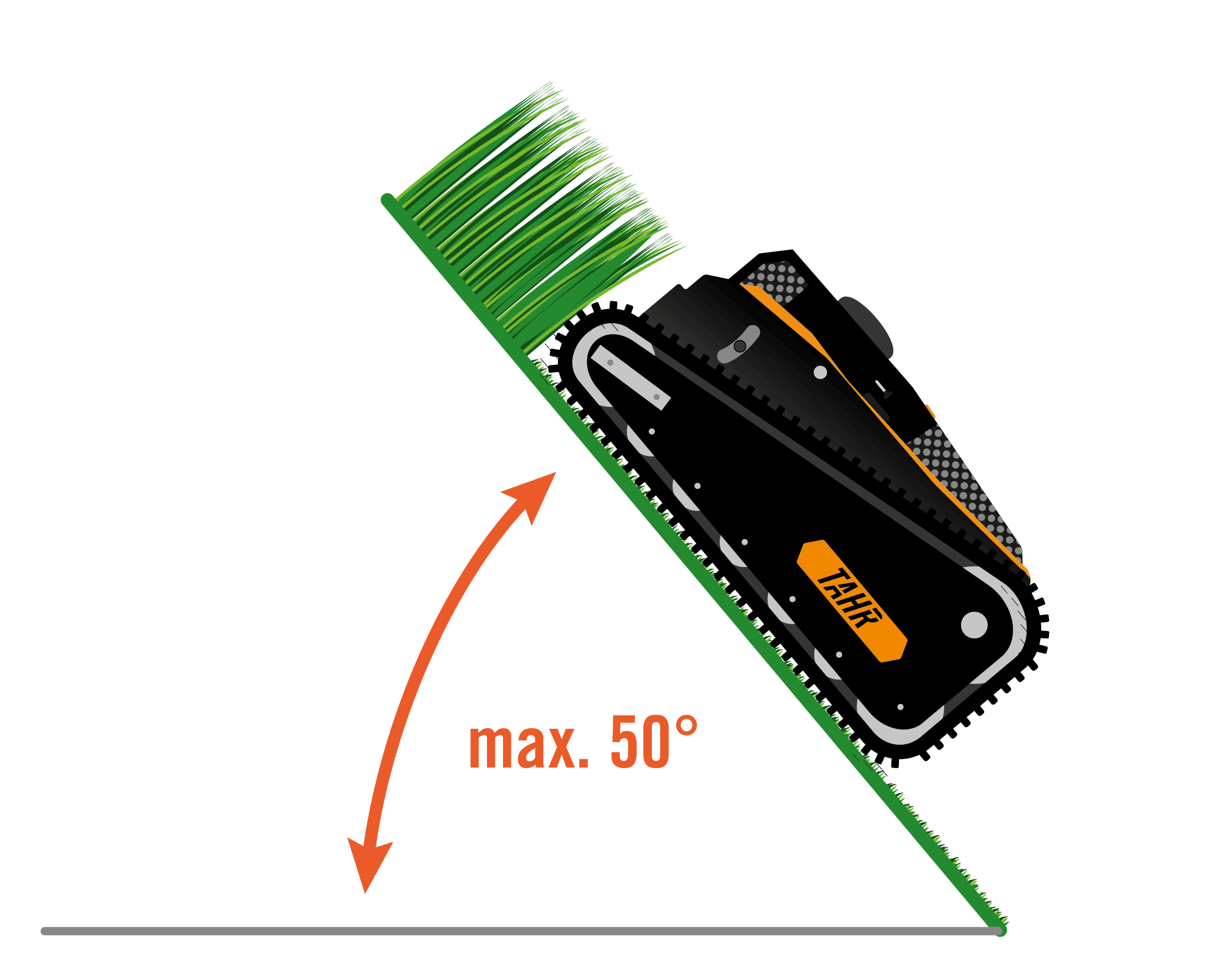
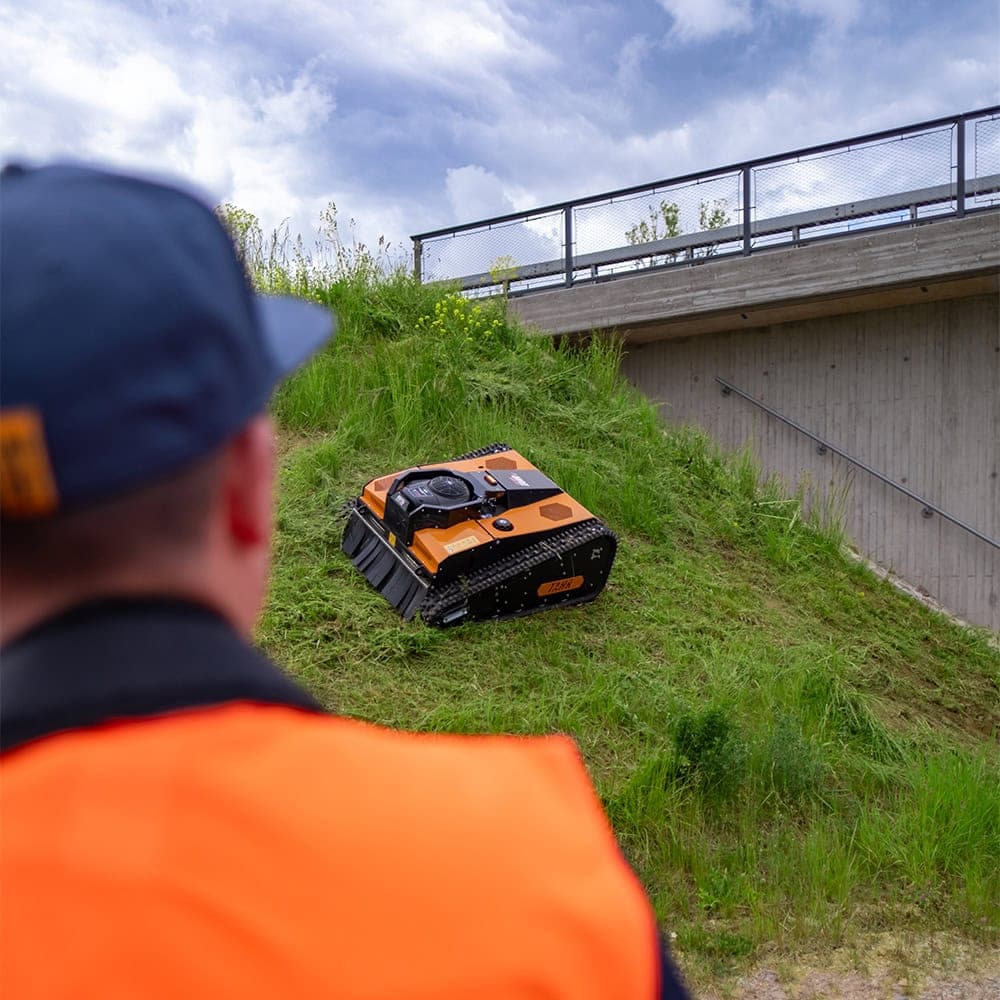
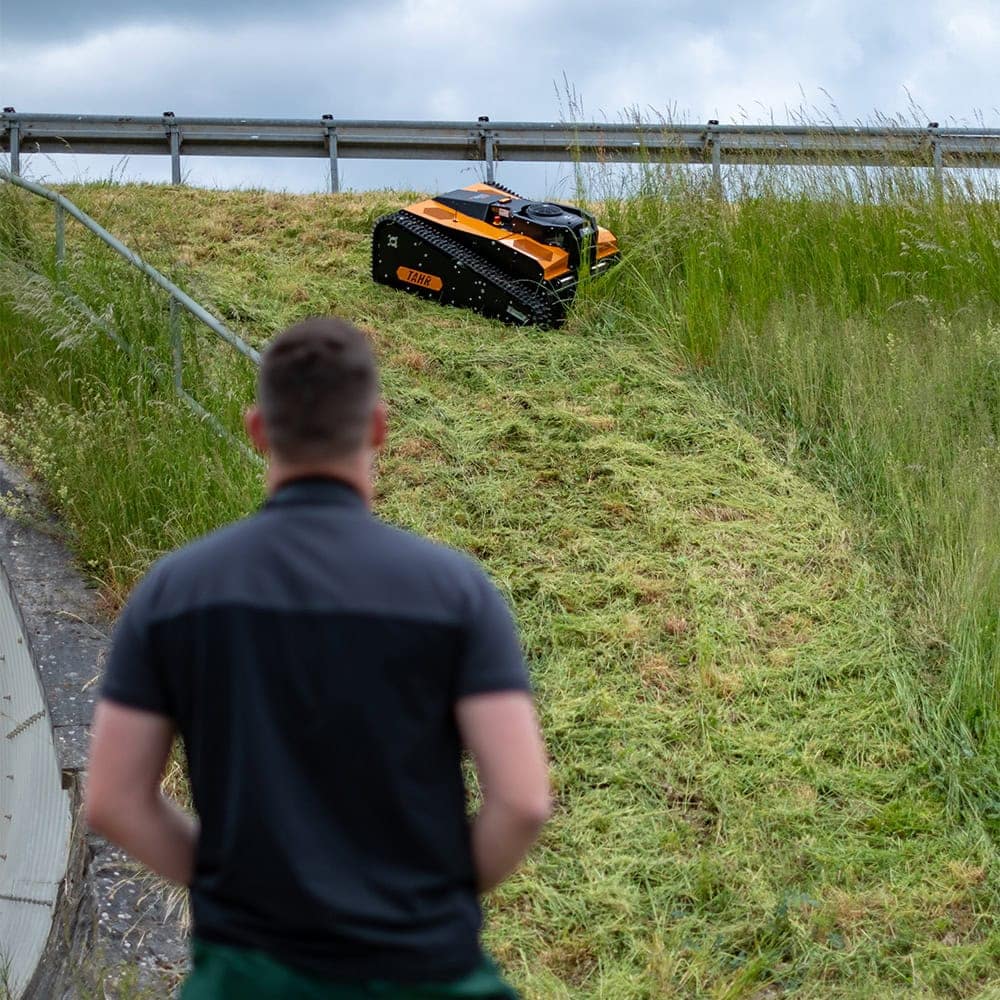
The Tahr RC is designed for slopes up to 50° – a value far exceeding what conventional ride-on mowers can achieve. Key to this are:

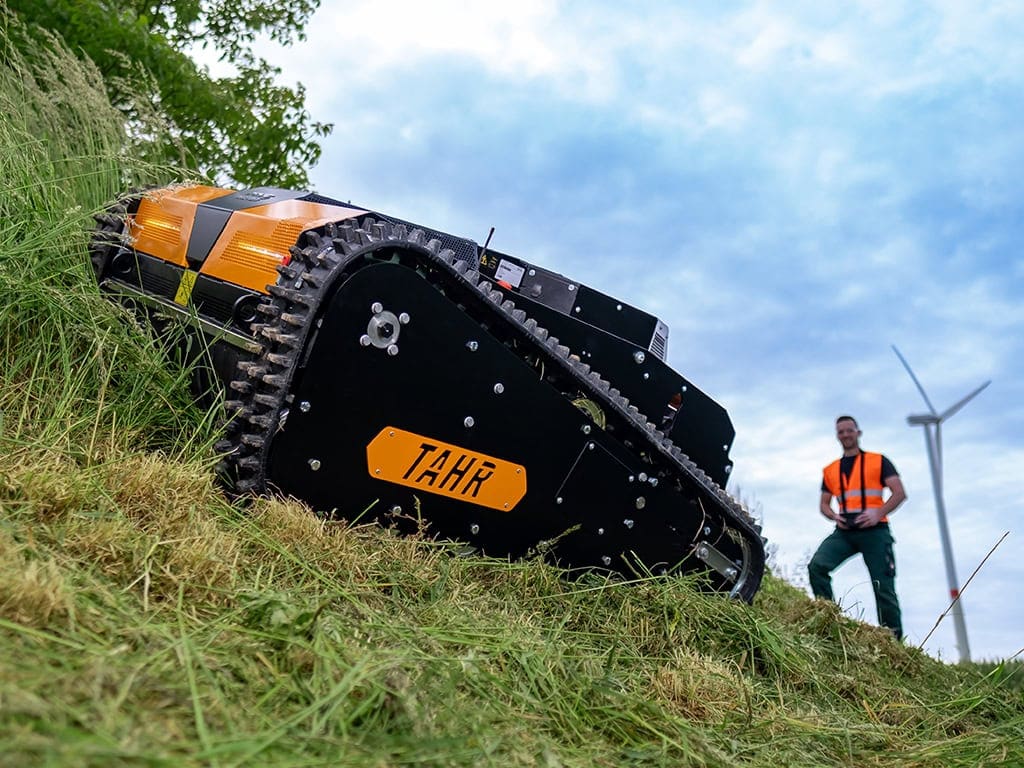
  • Crawler chassis with Super-Grip chains: ensures grip and traction even on wet ground.
  • Low center of gravity: for stability even on soft or uneven ground.
  • Low ground pressure (0.13 kg/m²): protects vegetation and prevents soil damage, especially in wet zones or embankments.

“Many underestimate what weight does to wet ground,” says Mühleck. “Our machine deliberately weighs less than comparable crawler mowers – this keeps it controllable and gentle on the ground.”
tahr-security-1

tahr-security-2

tahr-security-3

tahr-security-4

Productivity That Can Be Measured

With an area performance of up to 4,500 m²/h, the Tahr RC is one of the most efficient RC mowers in its class. It works constantly, evenly and without time losses due to turning maneuvers or downtime.

Especially in large-scale projects such as solar parks, dikes or railway embankments, this efficiency adds up to measurable savings.

For municipalities and service providers, this means: shorter deployment times per area, lower personnel requirements and a significantly faster amortization of the machine.

Roman Mühleck: “In everyday use, this means: One operator with the Tahr RC can handle the same area that previously required two people with two machines – and without safety risks.”


G99000101-AS-Motor-AS-990-Tahr-RC-AS-990-Tahr-RC-Motor-1200px (1)

tahr-build-2

tahr-build-3

tahr-build-4

tahr-build-5

tahr-build-1

Robust Construction, Simple Maintenance

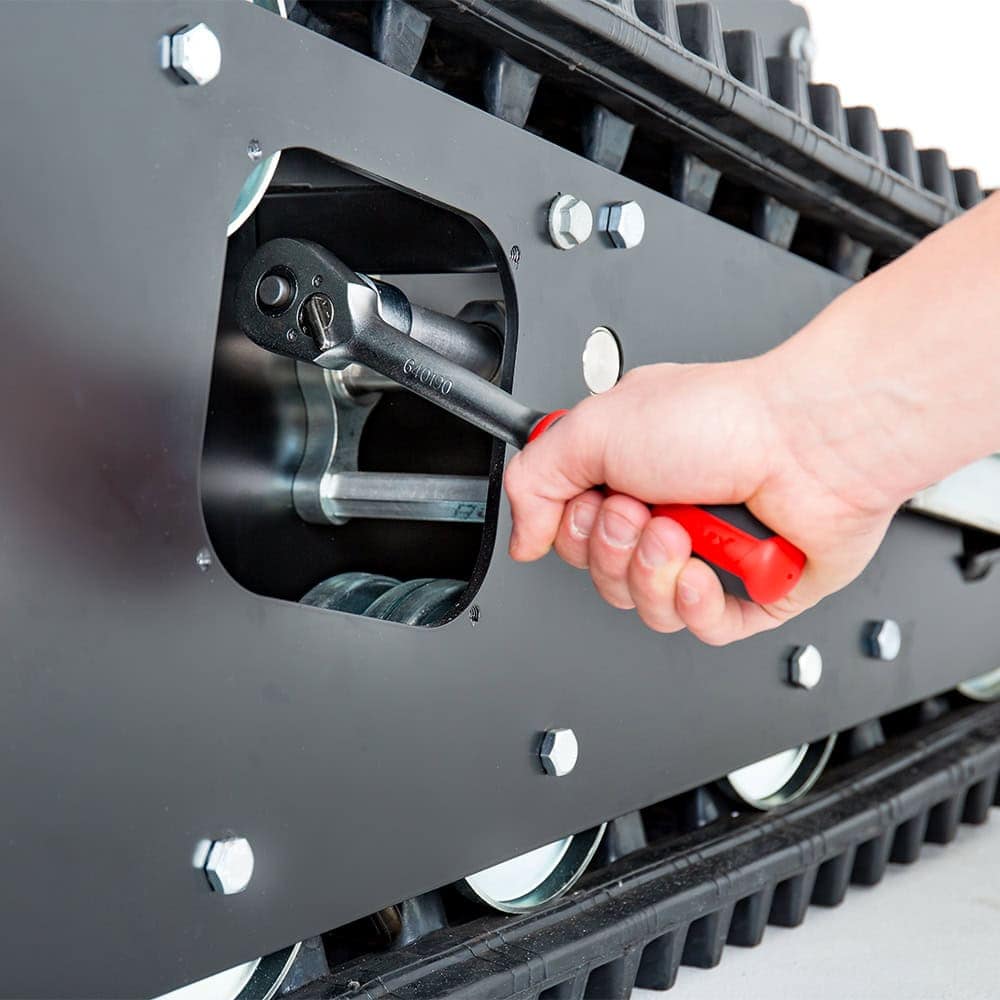
Like all RC mowers from AS-Motor, the Tahr was also designed so that maintenance does not require specialist knowledge.

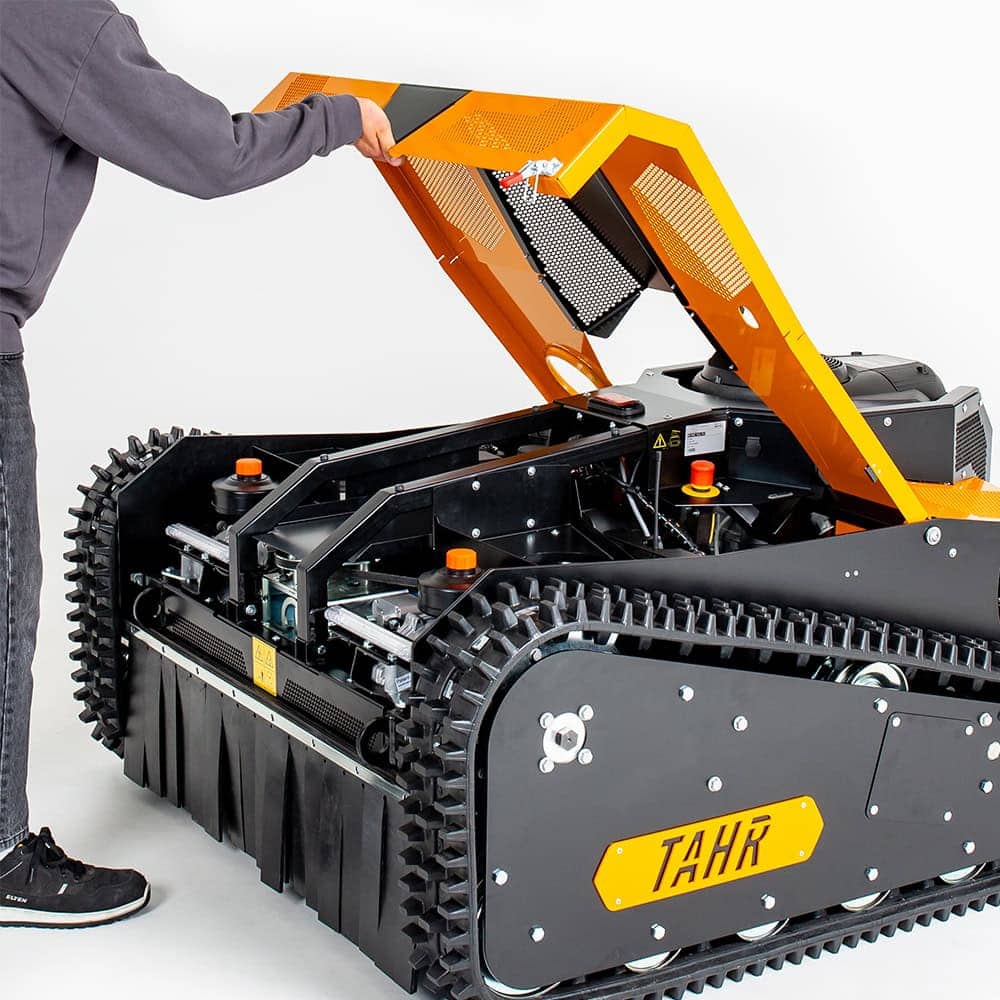
The foldable engine cover allows direct access to all service points.

Minimal electronics, robust hydraulics and mechanical components guarantee reliability even under continuous load.

The Tahr RC was developed in Bühlertann based on decades of experience in steep slope mowing – a combination of innovation and tradition.

“We don’t build experiments, but solutions,” Mühleck summarizes. “The Tahr is an example of how much practical knowledge is in every detail.”

Compact Design – Efficient in Transport

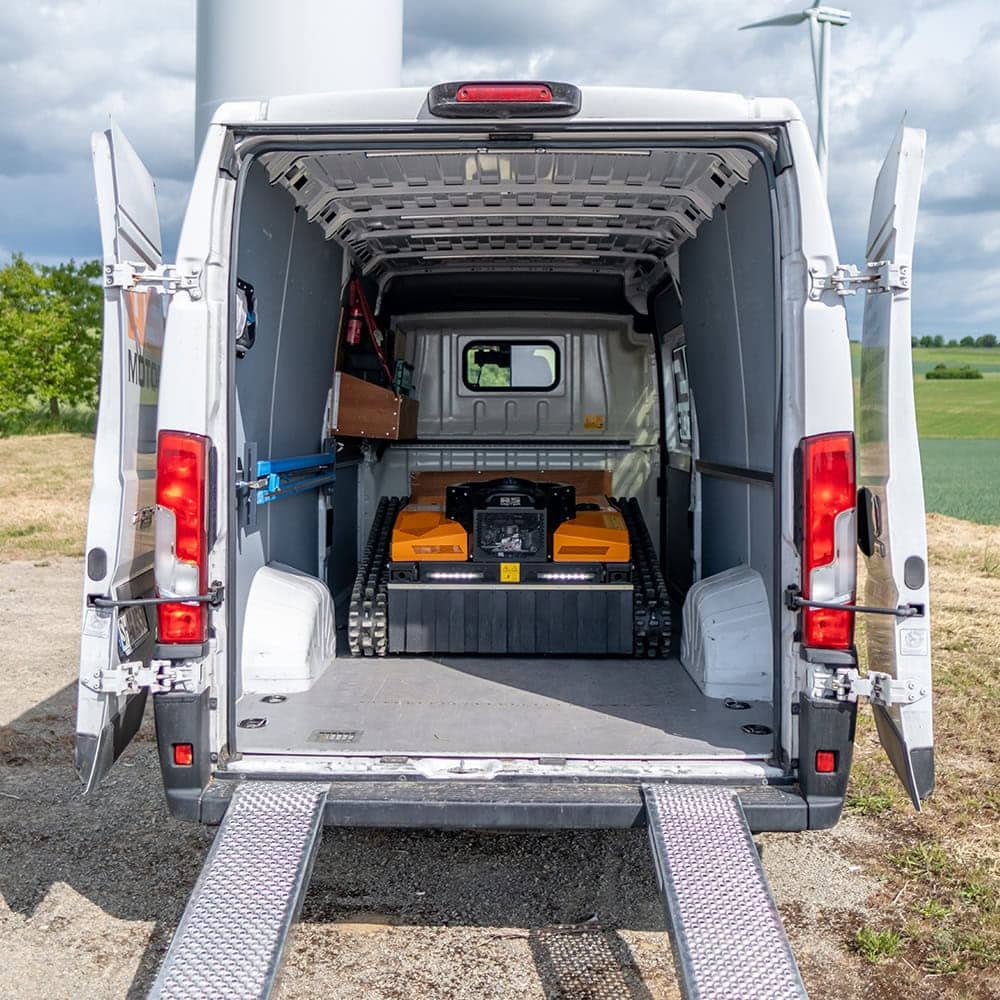
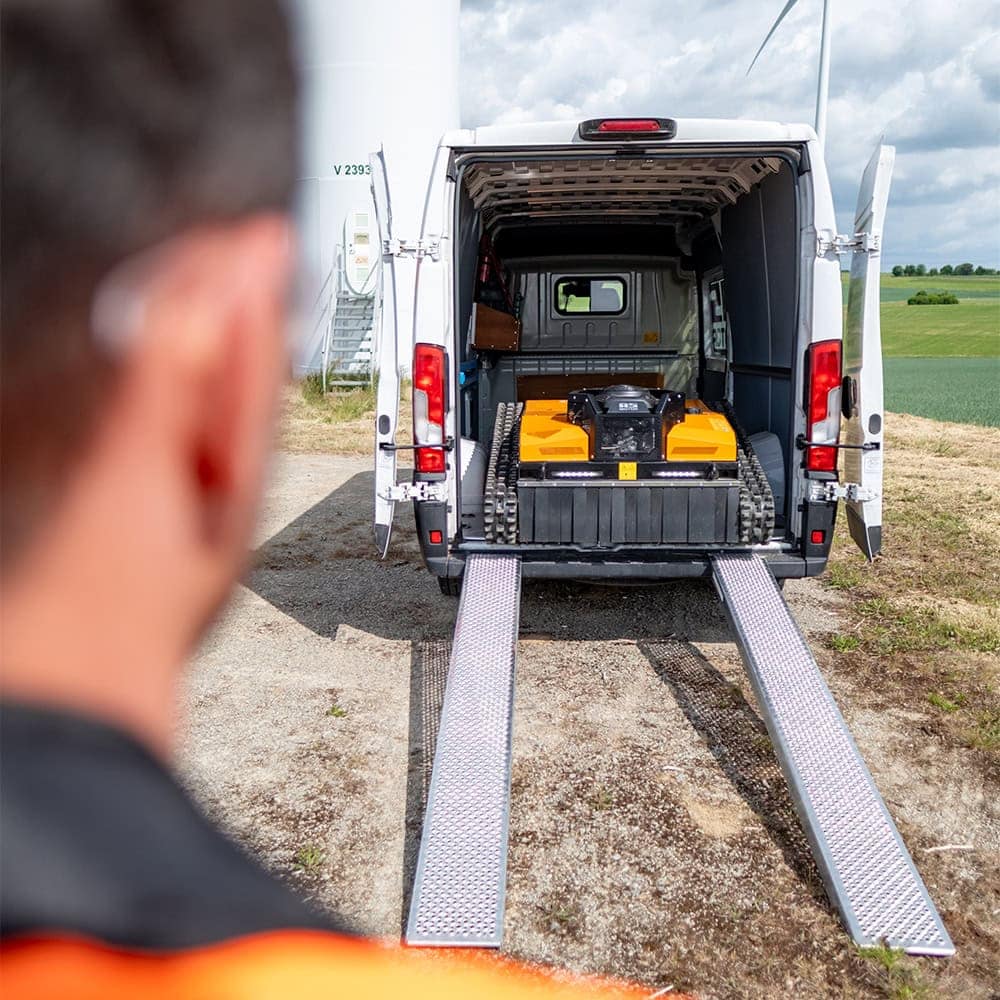
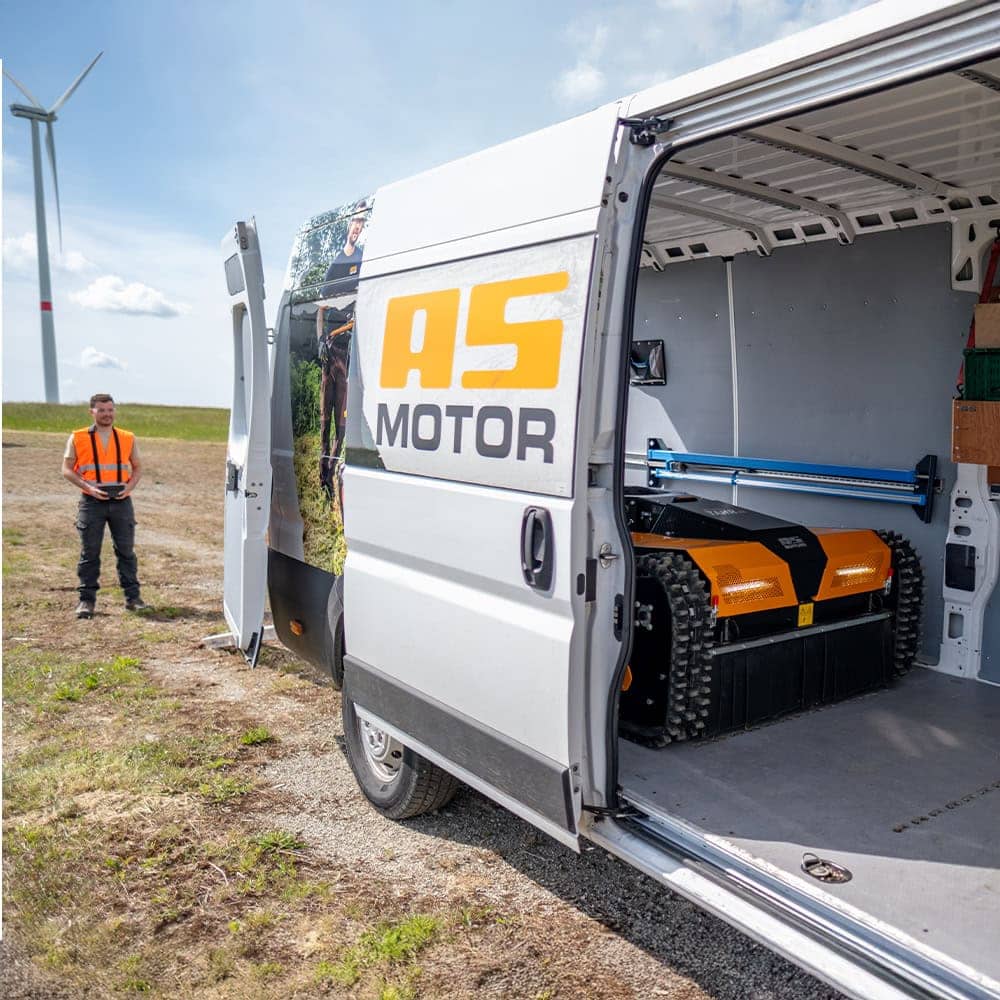
Performance alone is not enough in everyday municipal use. What matters is how quickly and easily a machine can get to the deployment site. The AS 990 Tahr RC was therefore deliberately designed to be compact.

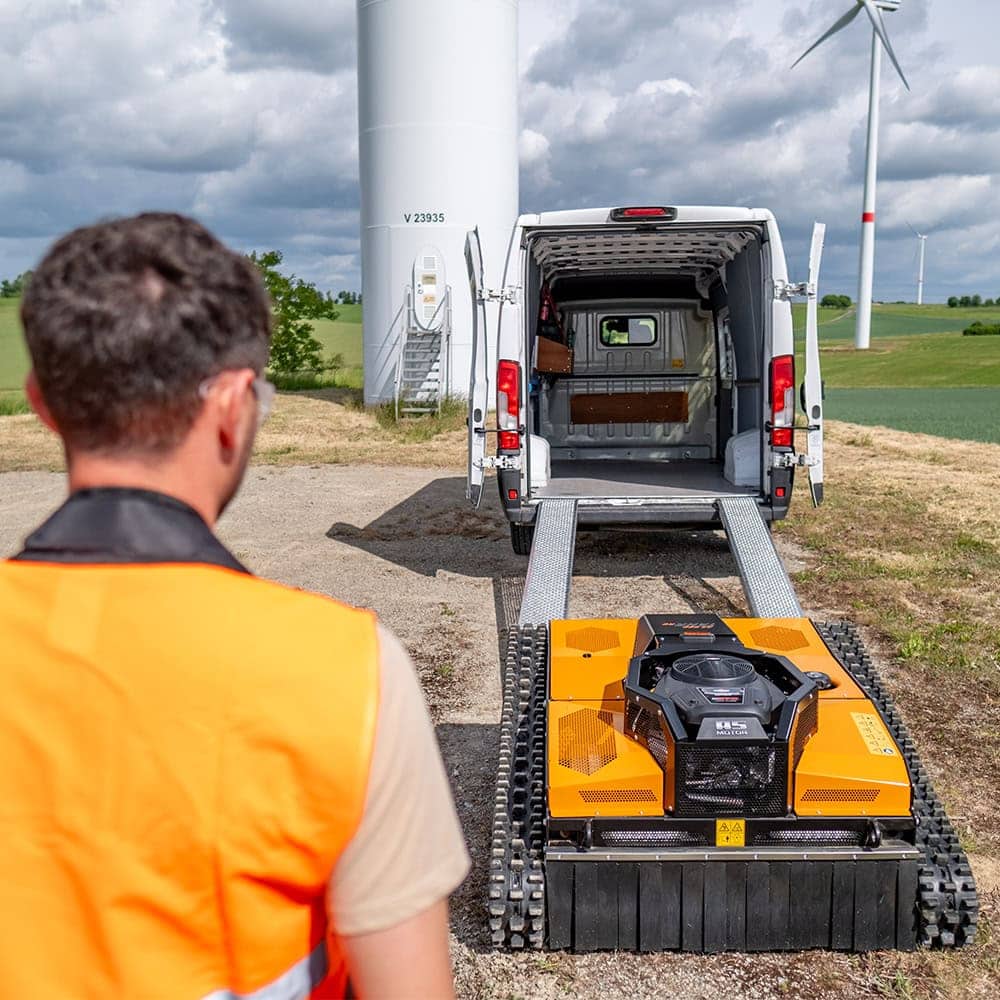
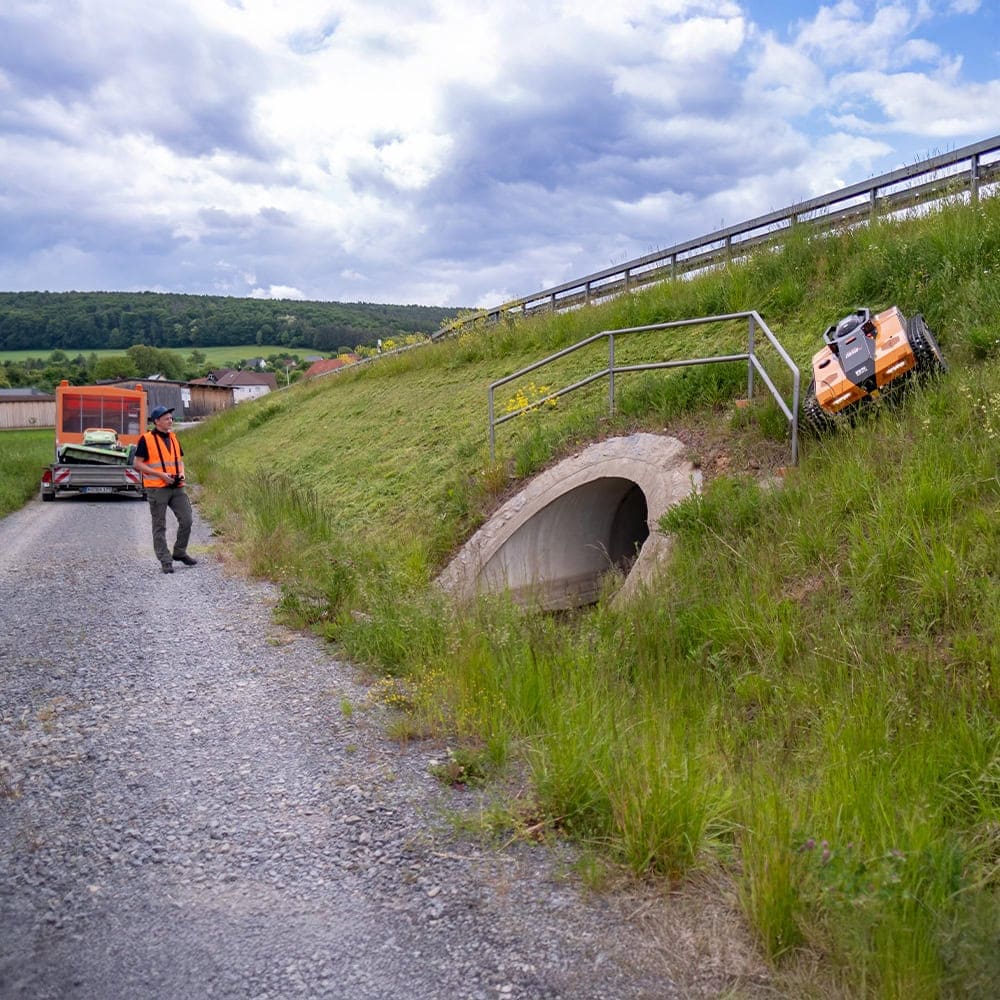
Its low height, closed design and balanced weight allow transport in standard transporters or on compact trailers – without special solutions, without additional logistics. This saves time, reduces costs and makes the Tahr RC particularly attractive for municipal yards and service providers with changing deployment sites.

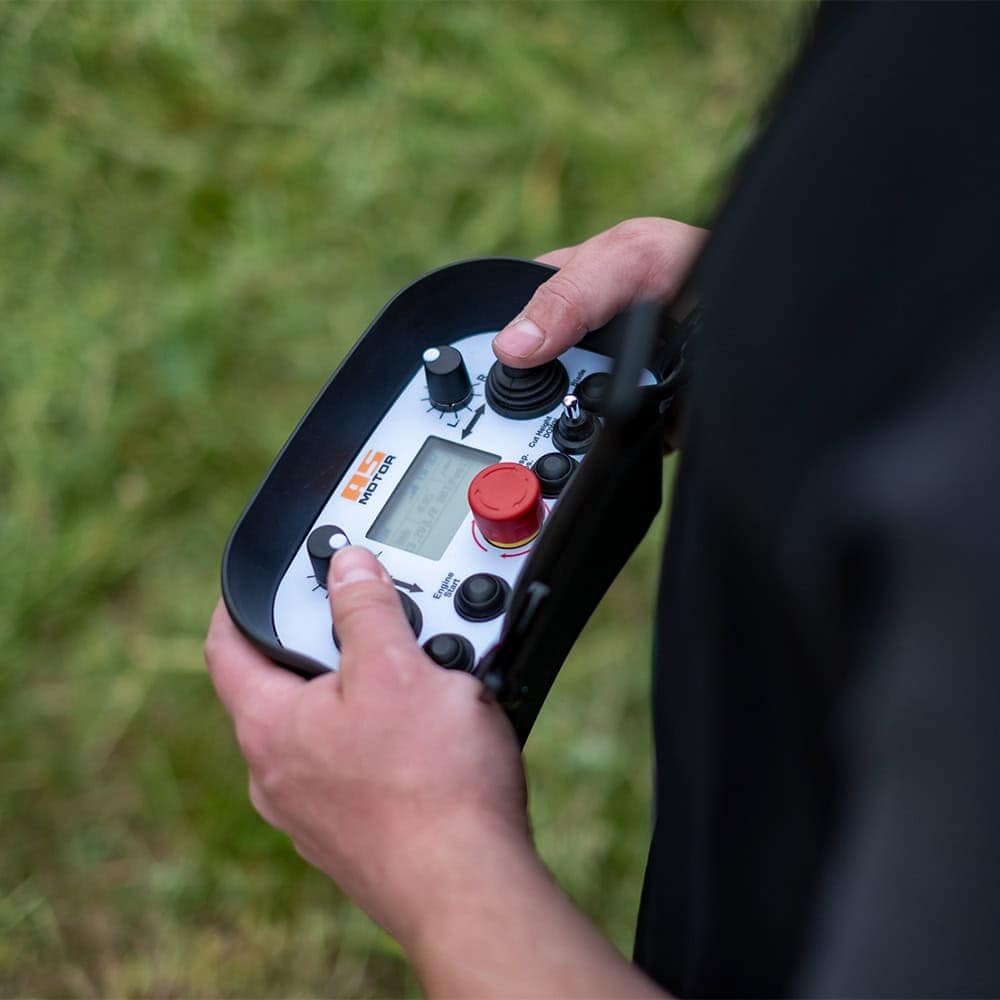
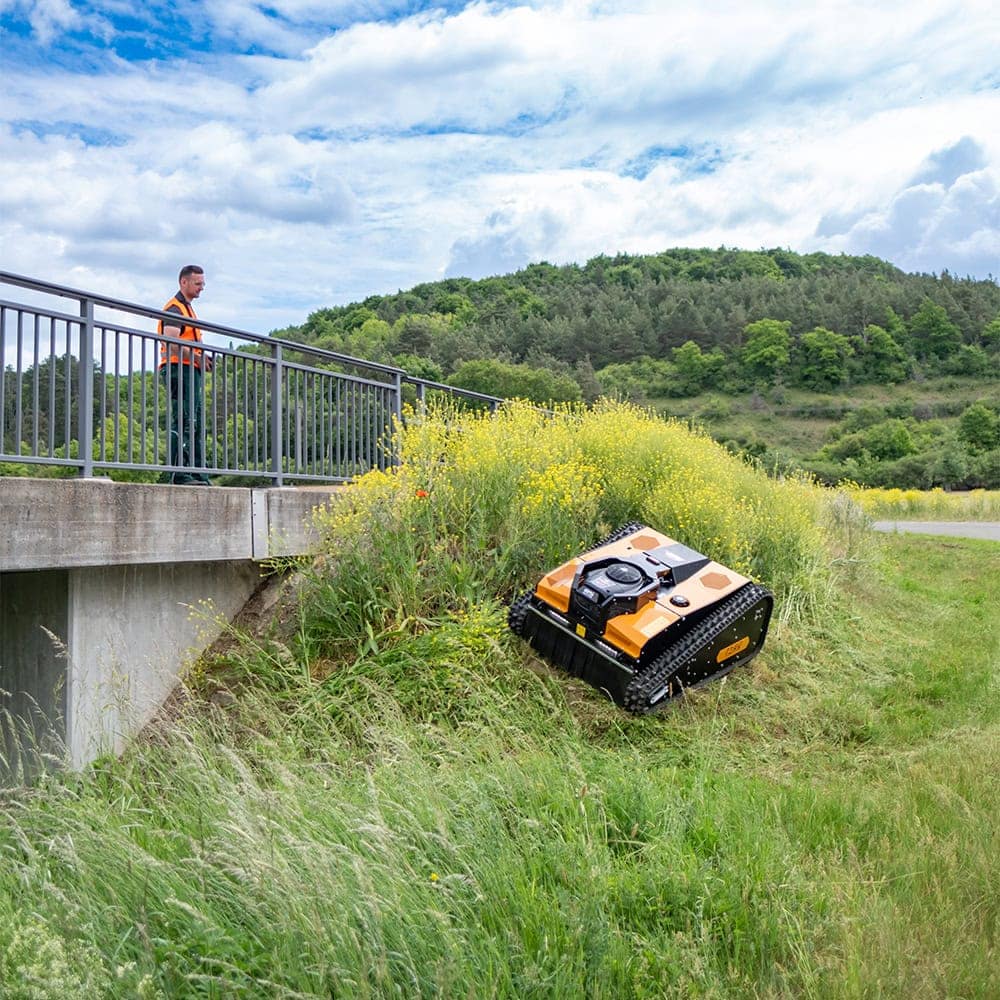
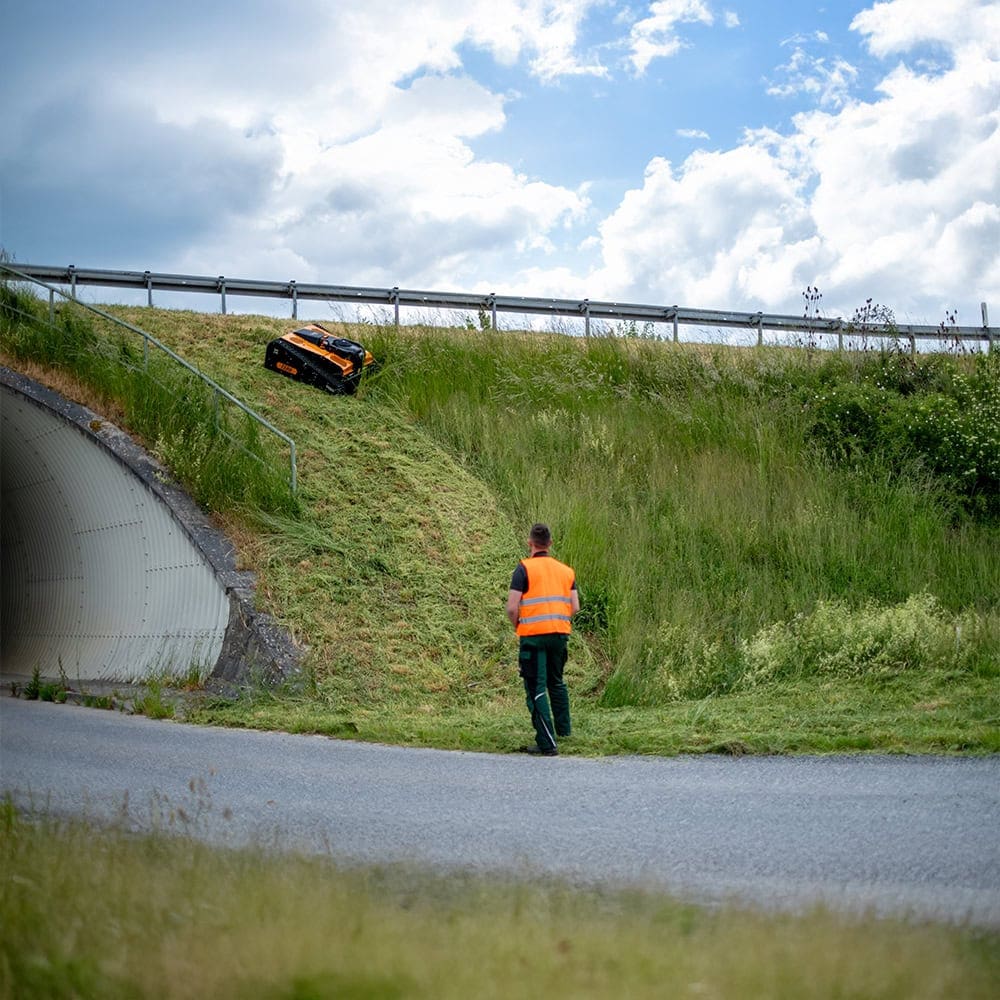
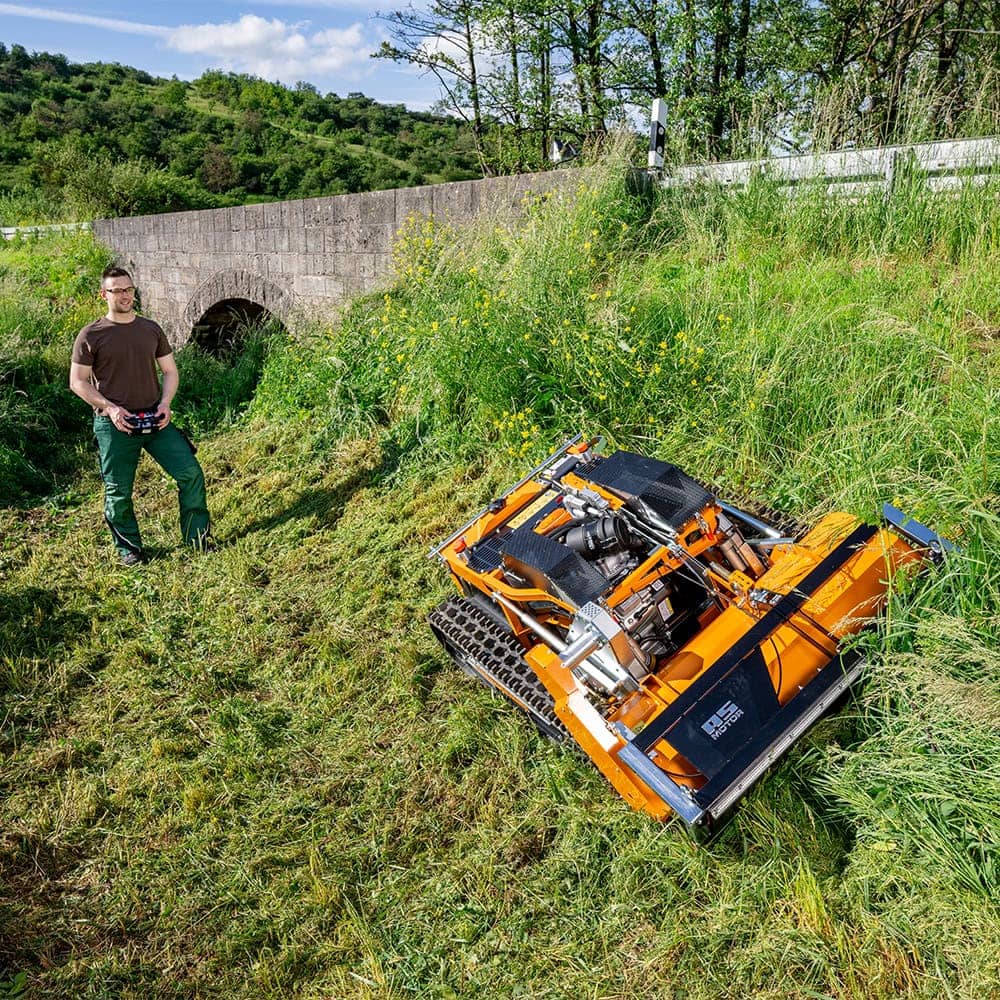
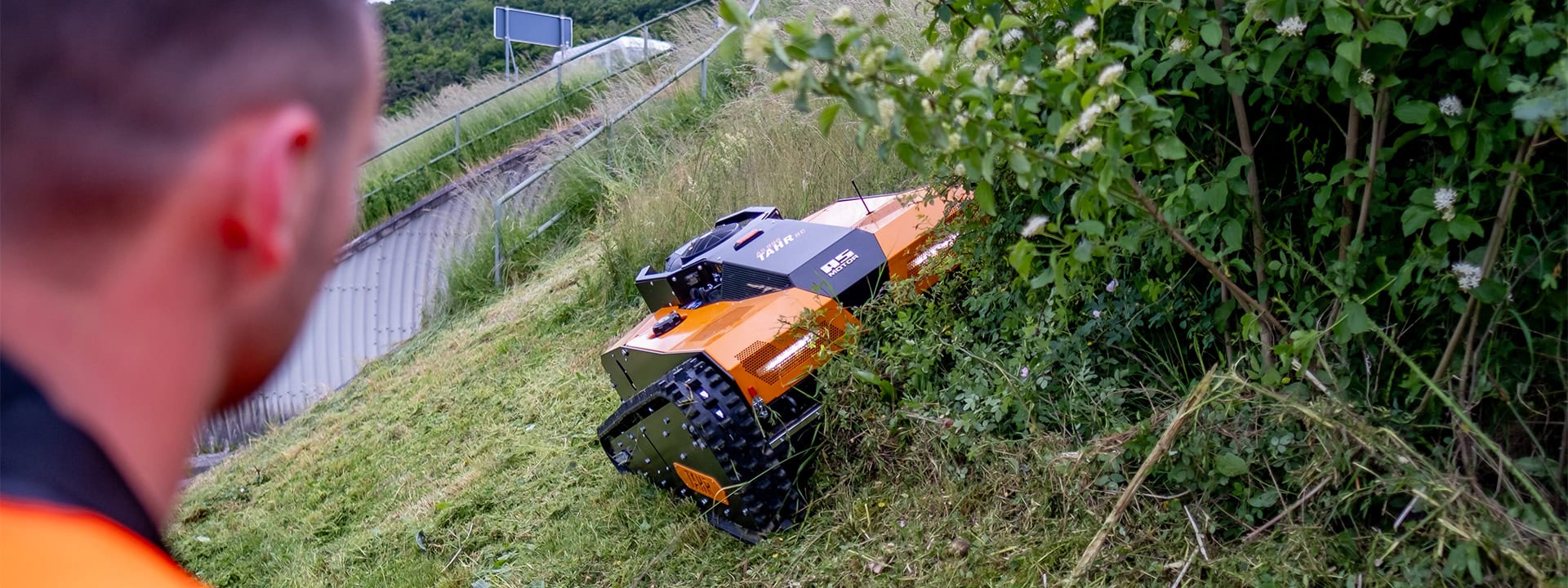
Even in use, the small footprint shows: little space required, low ground pressure and controlled movements even in tight areas such as bridgeheads, underpasses or wind turbines. The operator remains outside the danger zone, the machine works where space is limited and safety is crucial.

In short: The Tahr RC is not only built for the slope, but for the entire deployment process – from arrival to the last pass.
tahr-transport-2

tahr-transport-4

tahr-transport-1

tahr-transport-3

To view this video, please accept cookies from external media
Youtube Video Thumbnail

Application Example: Bridgeheads, Underpasses & Infrastructure Maintenance

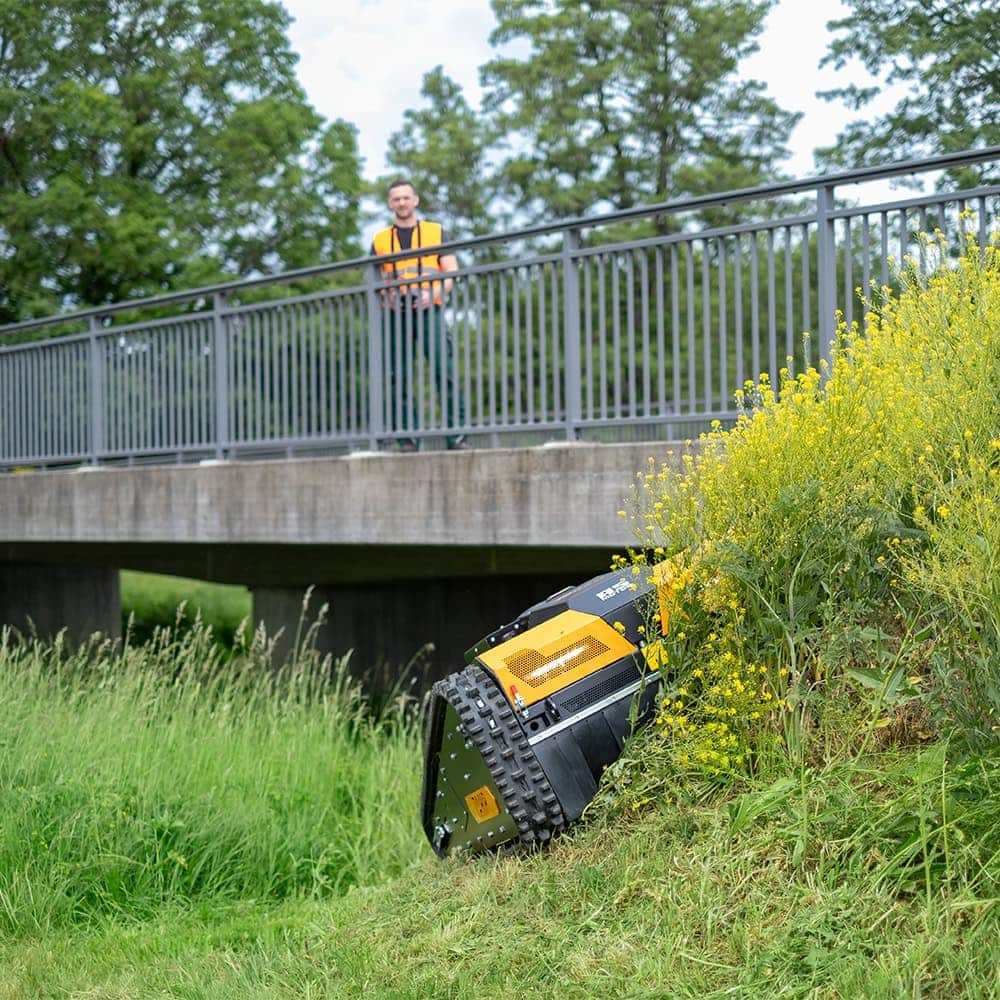
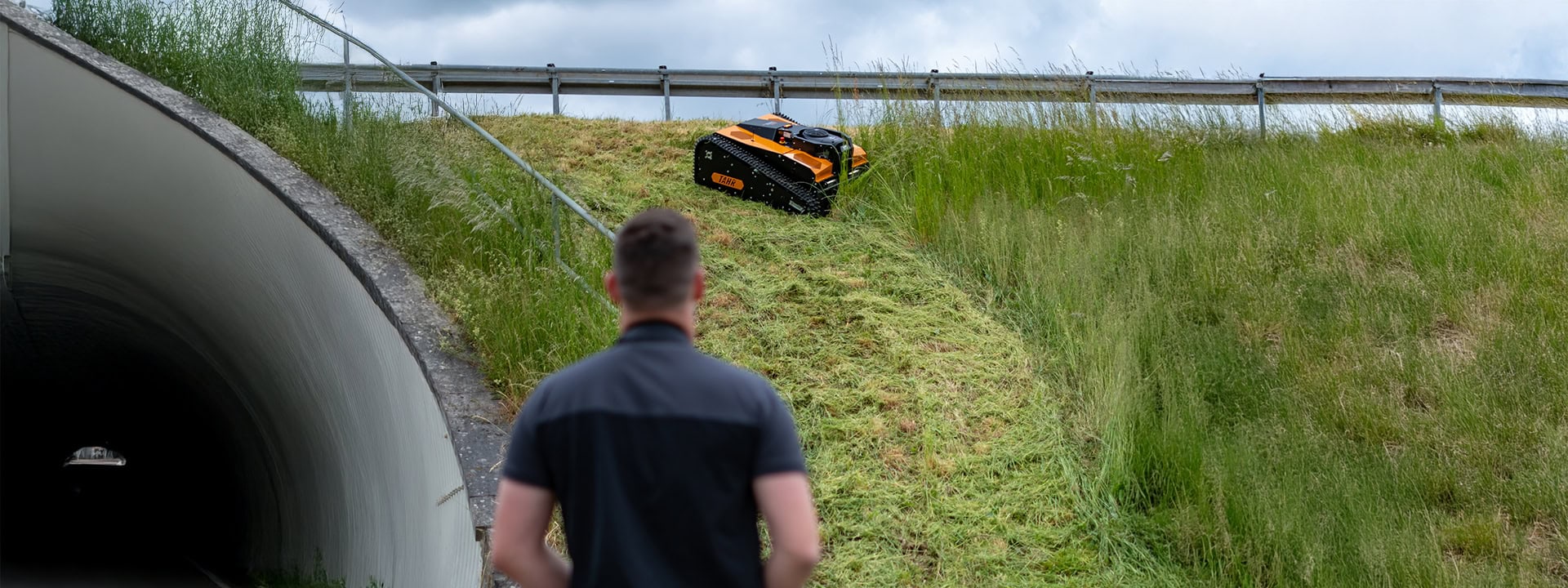
Bridgeheads, underpasses and transition areas along roads and paths are among the most demanding deployment sites in municipal green maintenance. Tight space conditions, varying inclines, hard edges, concrete structures and often wet ground meet high safety requirements and ongoing traffic here.

The AS 990 Tahr RC was developed precisely for these situations.

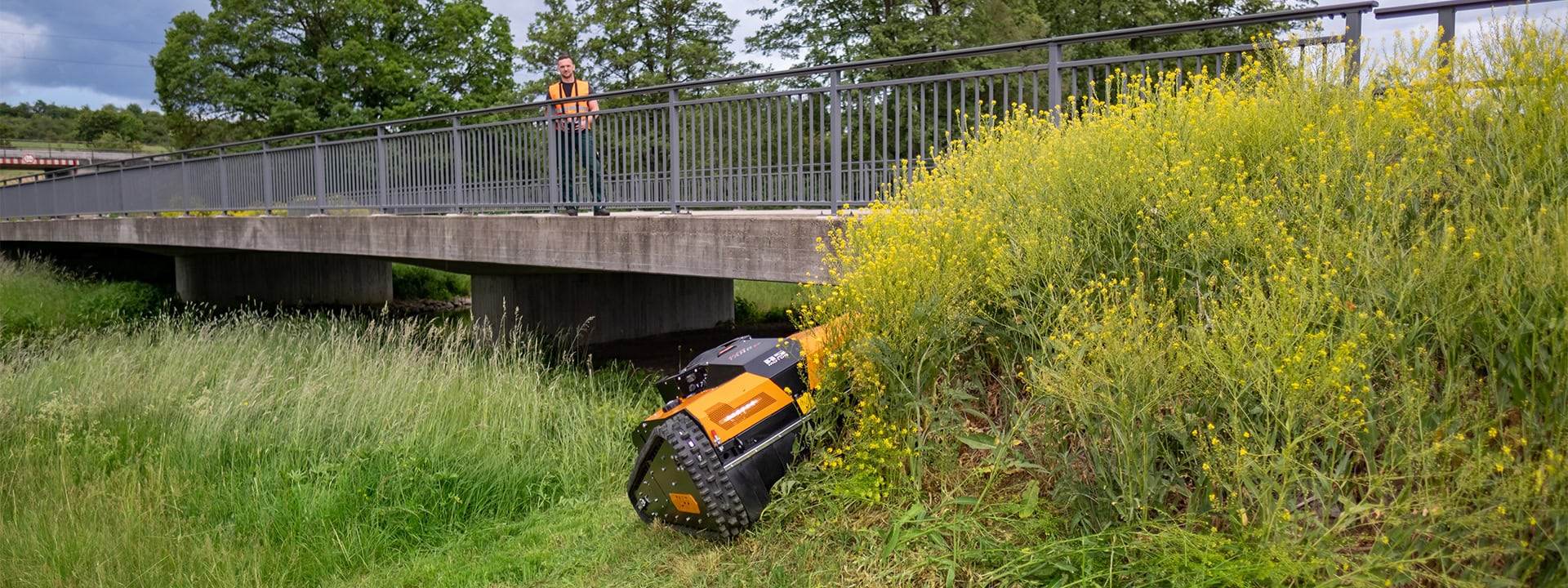
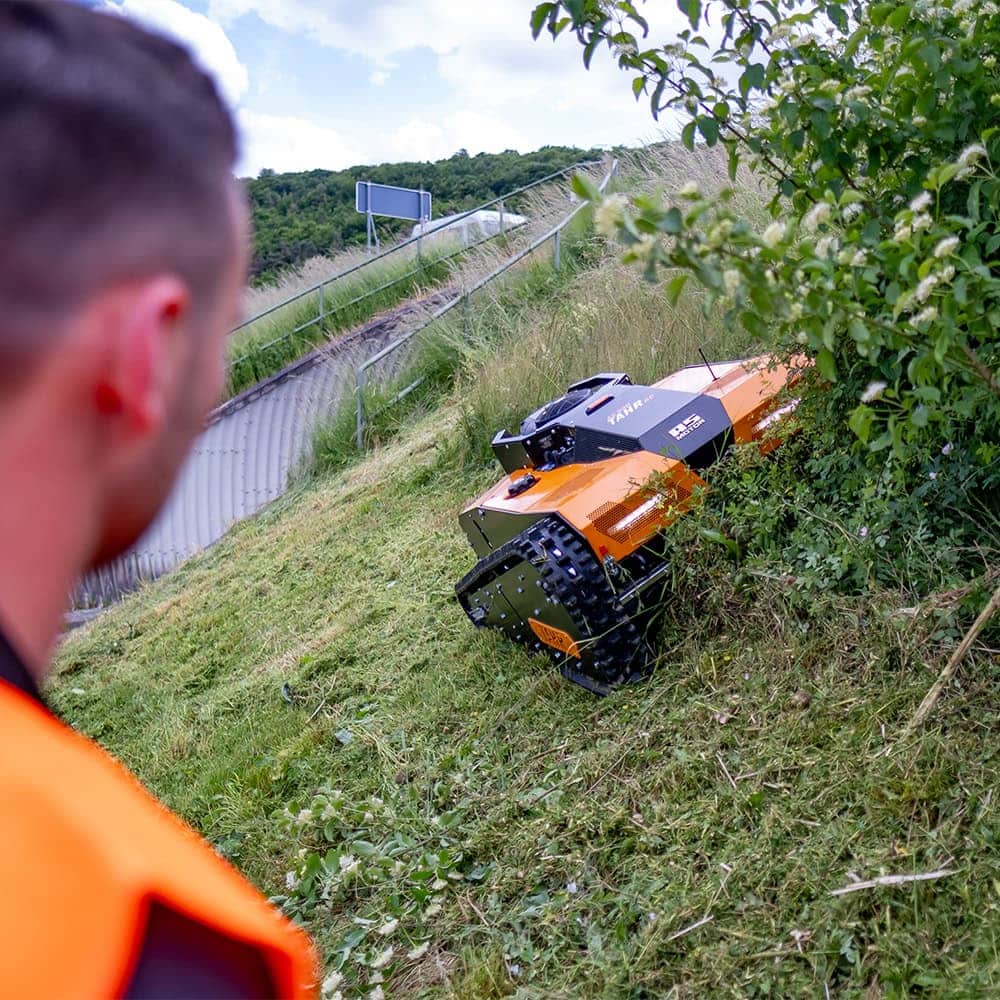
Thanks to its compact crawler chassis and the ability to mow forwards and backwards, the Tahr RC can fully maintain linear slopes on bridges, ramps and underpasses without risky turning maneuvers near structures or drop edges. The operator always remains at a safe distance above or to the side of the area.

The advantage of the system is particularly evident at bridgeheads:

  • No turning in tight spaces, no slipping at edges
  • Consistent tracking along concrete, guardrails and railings
  • Low ground pressure protects slopes from washout and erosion damage
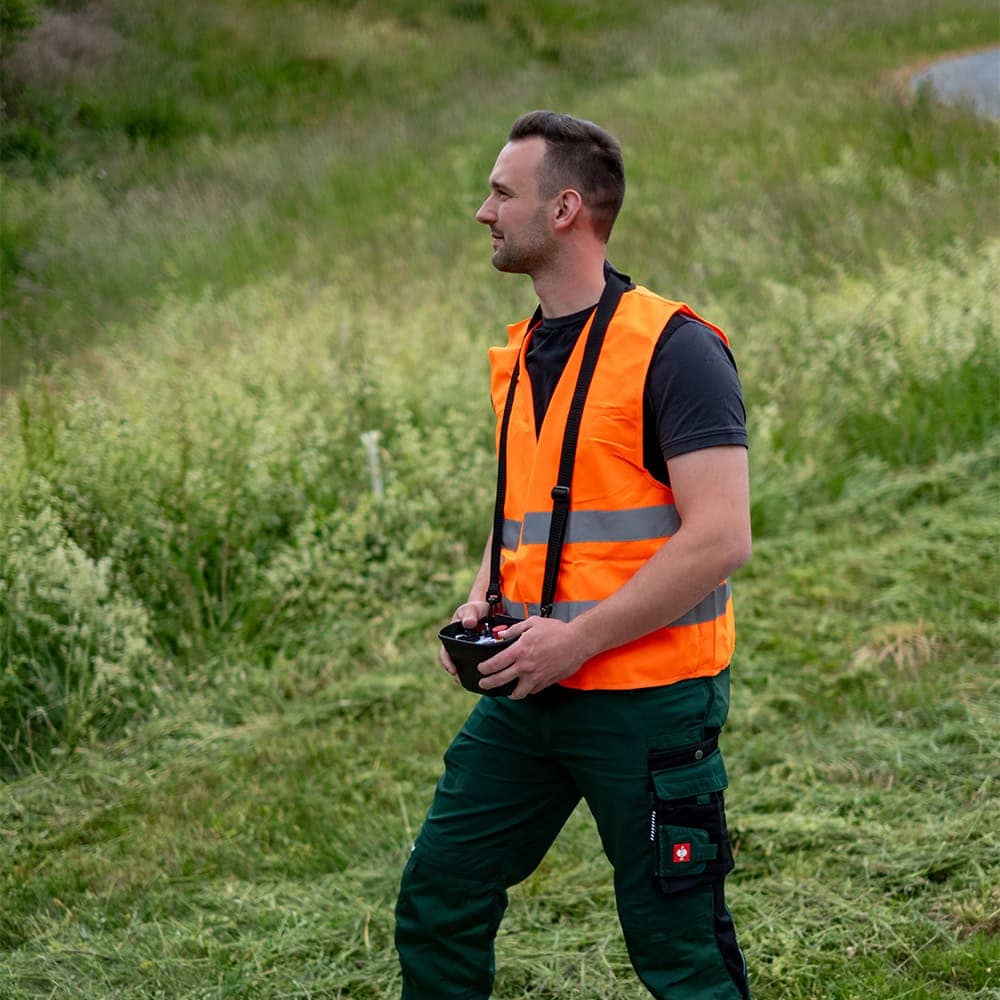
  • Remote control keeps the operator away from traffic, heights and poorly visible zones

Roman Mühleck puts it succinctly: “Especially at bridgeheads or underpasses, turning is the most dangerous moment. The Tahr RC eliminates precisely this risk factor.”

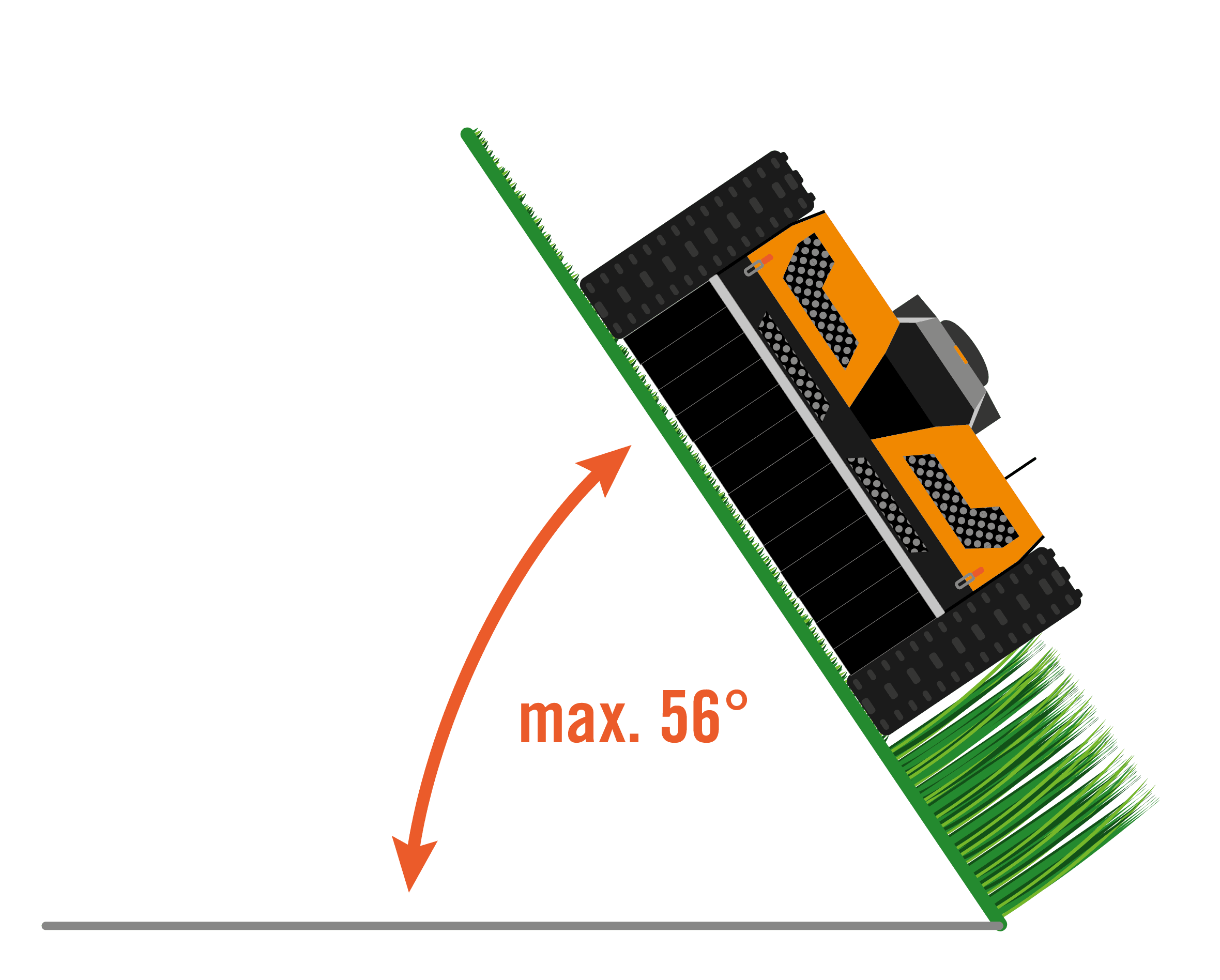
The Tahr RC also demonstrates its strengths under structures and at hard-to-see transitions. The combination of low height, high slope capability up to 56° and controlled RC steering allows for clean work where conventional machines reach their limits or are not even allowed to be used.

For municipalities and infrastructure operators, this means:

more safety, fewer closures, shorter deployment times and permanently maintained structures.
tahr-application-1

tahr-application-4

tahr-application-2

tahr-application-6

Conclusion: Efficiency Only Becomes Valuable When It Is Safe

The AS 990 Tahr RC is not a showpiece or a technical experiment, but a precise work tool for professionals who have to calculate daily under real conditions – with time, risk, personnel and soil conditions. Its concept follows a clear logic: Where turning is dangerous, time-consuming or damaging to the soil, it must be eliminated. By mowing on both sides without turning maneuvers, the Tahr RC not only reduces working time but also eliminates one of the most critical moments in steep slope operation. The result is a measurable increase in area performance with simultaneously higher work safety and lower strain on man, machine and ground.

In the AS-Motor RC portfolio, the Tahr RC thus stands for linear efficiency on long steep slopes – on embankments, bridgeheads, underpasses and infrastructure-sensitive areas where soil stability, precision and safety are crucial. In the context of sustainable green and infrastructure maintenance, the concept is also convincing: low ground pressure protects vegetation and root systems, avoids erosion and reduces rework. Fewer interventions, less damage, longer service life – economically and ecologically sensible.

Roman Mühleck sums it up aptly: “Not everyone needs automation. But those who want to work efficiently need solutions that consistently combine safety and productivity.”

The AS 990 Tahr RC is precisely such a solution – for professionals who not only mow but also bear responsibility.

Experience Mowing Without Turning – Live in Action

See for yourself how the AS 990 Tahr RC saves time, reduces risks and redefines efficiency on steep slopes. Whether embankment, slope or infrastructure-sensitive area – experience the difference where it counts: in practice.

Arrange a live demonstration at a specialist dealer near you or discover the entire AS-Motor RC portfolio.
Safety first – How remote-controlled mowers keep people out of harm's way

By far the best work

Steep slopes, road embankments, scorching sun and dense vegetation: anyone who works in municipal green spaces moves daily between routine and risk. In the past, employees stood on slopes with brush cutters, surrounded by noise, dust, pollen and exhaust fumes – a back-breaking job with an increased risk of accidents. Today, remote-controlled mowing technology is fundamentally changing this reality.

Roman Mühleck, Product Marketing Manager at AS-Motor, sums it up: ‘Remote-controlled mowers make mowing easier and safer. They protect people from dangers that used to be simply part of the job.’

The big difference: distance instead of risk

The big difference: distance instead of risk

With a range of up to 300 metres, AS-Motor RC mowers keep the operator consistently out of the danger zone. The risk of slipping or tipping accidents is significantly reduced. The user stands in the shade instead of in the blazing sun, breathes clean air instead of exhaust fumes, and is free from noise, pollen and insect bites. No vibrations, no unnatural postures, no contact with thorns or nettles – a safety concept that focuses directly on people.

Roman Mühleck explains:

‘Since the invention of the brush cutter in the 1970s, it has been considered the standard for steep or inaccessible areas. But the physical strain was enormous. Only RC technology makes it possible to work safely in such situations.’

Practical example: Wört building yard – safety as an investment

The Wört building yard in the Ostalb district provides an impressive example. Manager Manfred Hopfensitz recalls earlier operations with brush cutters and hand-held mowers: hot summer days, steep slopes, hornets, dust and danger. Today, the team works with an AS 940 Sherpa 4WD RC – and the difference is tangible.

The municipality made a conscious decision to invest in employee safety rather than pure area performance. Today, the four building yard employees benefit from increased motivation, less stress and fewer absences. Occupational safety has become an economic factor.

‘On steep slopes, the remote control keeps you out of the danger zone. For us, the mower was primarily a safety decision.’

– Manfred Hopfensitz (Head of the Building Yard for the Municipality of Wört) read on

Mow safely – with remote control

AS-Motor mowers offer safety through distance and precise control. Each RC model is equipped with specific safety features.

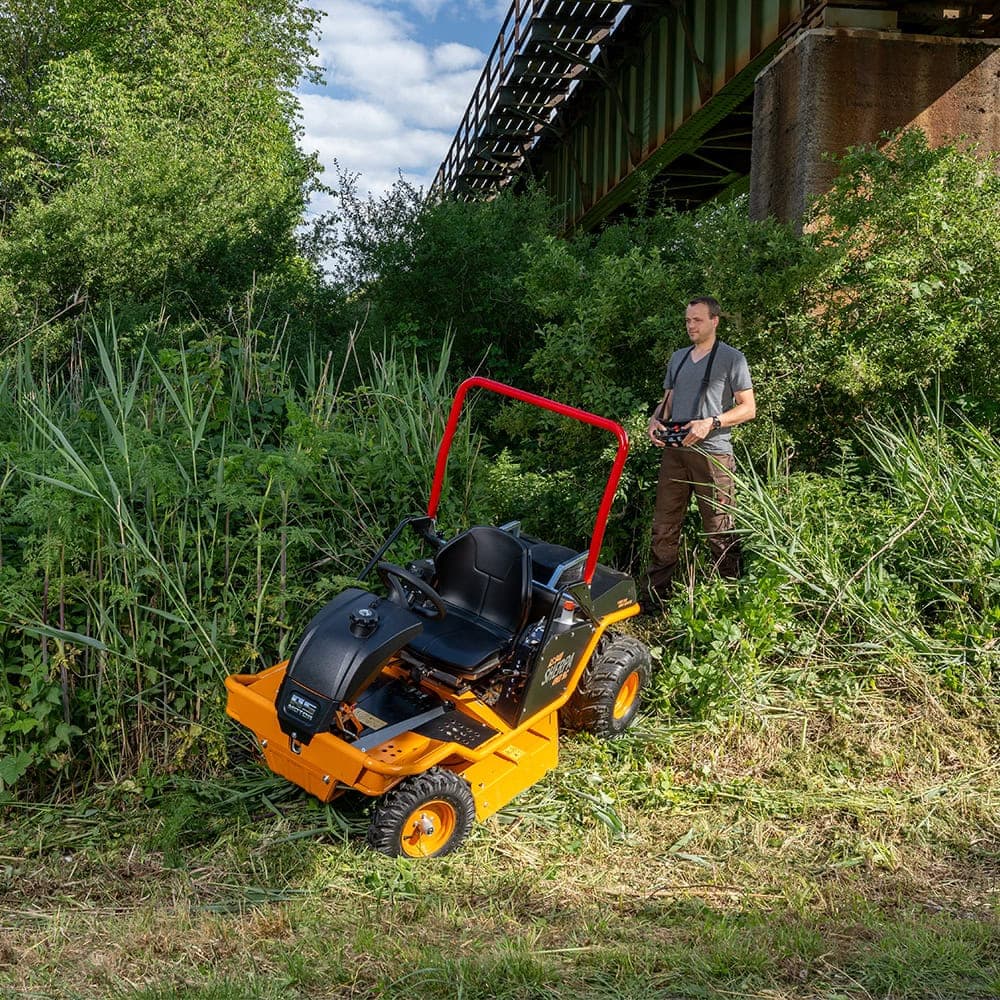
  • AS 940 Sherpa 4WD RC – The world’s first hybrid of a ride-on and RC mower. Ideal for undulating terrain, slopes and open areas. The Sherpa RC combines four-wheel drive, cross blade system and surf deck technology with an ergonomic driver’s seat and intuitive remote control. Thanks to its slope capability of up to 33°, foldable handlebar, differential lock and closed mulching hood, it offers maximum safety, even on rough or wet terrain.
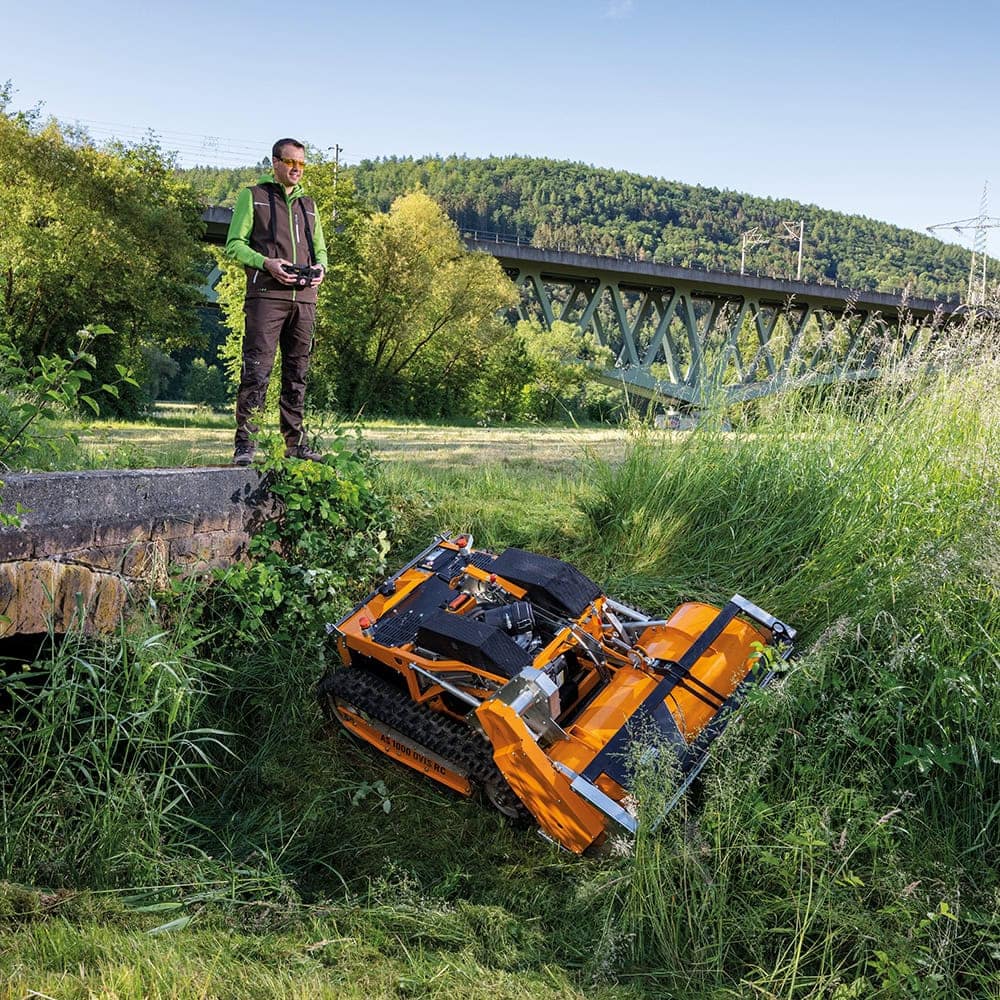
  • AS 1000 Ovis RC – The flail mower professional with caterpillar drive. Robust, easy to operate and designed for extreme slopes up to 55°. Ideal for noise barriers, railway embankments and solar parks.
  • AS 990 Tahr RC – The productivity wonder among RC mowers. The chain-driven rotary mower can mow forwards and backwards, saving turning manoeuvres and greatly increasing the area coverage on slopes up to 56°.

Safe steep mowing – developed, tested and built in Germany.

Safety meets efficiency

RC mowers such as the AS 1000 Ovis RC or the AS 990 Tahr RC mow steep slopes up to 56° and work precisely, cleanly and, when used correctly, in an ecologically sound manner. In addition to safety, they increase area coverage by six to sixteen times compared to hand-guided equipment.

Operators are no longer at the centre of danger, but control the mower safely and precisely from a distance. This not only reduces the burden on employees, but also on local authorities and service providers, who can expect lower sickness and accident rates and higher employee motivation.

‘Since the invention of the brush cutter in the 1970s, it has been considered the standard for steep or inaccessible areas. But the physical strain was enormous. Only RC technology makes it possible to work safely in such situations.’

Health as a corporate value

Noise, vibrations, dust and exhaust fumes are classified as health risks according to EU occupational health and safety guidelines. AS-Motor RC mowers reduce these hazards to a minimum and create a healthy working environment. The ability to remotely control a mower means less physical effort, greater well-being and reduced risk. This is not a luxury – it is a demonstration of responsibility towards employees.

Roman Mühleck sums it up:

‘Manual labour in risk zones is no longer acceptable today. Technology must and can protect people.’

Conclusion

Remote-controlled mowers represent a new generation of professional safety technology. They combine productivity with occupational safety and comfort with control. Local authorities and service providers who invest in RC technology are not only investing in performance, but also in the health of their employees – and thus in future viability.
AS-Motor RC mowers also contribute to sustainable, extensive green space maintenance: less soil compaction, stable slopes and natural mowing that promotes biodiversity.

Get off to a safe start now

Get started safely now Protect your employees – and increase the efficiency of your work at the same time. AS-Motor offers remote-controlled mowers for every application scenario: from the versatile AS 940 Sherpa 4WD RC to the robust AS 1000 Ovis RC.

Experience safety, performance and sustainability in one system.

Expert Guide: Choosing the right AS-Motor RC model for every situation

Four RC mowers. Four specialists. One clear task.

Anyone who works professionally on slopes, embankments or rough terrain knows that no two terrains are the same. That’s why AS-Motor offers four remote-controlled high-grass mowers that are precisely tailored to different requirements – from all-rounders to specialists for extreme slopes.

The models differ mainly in terms of drive, mower deck, weight and slope suitability:

‘There is no such thing as the perfect RC mower for everything – but there is the right one for every task,’ explains Roman Mühleck, Product Marketing Manager at AS-Motor.

AS 940 Sherpa 4WD RC – The all-rounder for mixed terrain

The AS 940 Sherpa 4WD RC is the most versatile model in the AS-Motor RC family. It is the only remote-controlled ride-on mower that combines ease of use with a high level of safety. It is driven manually on flat surfaces and conveniently remote-controlled on steep terrain.

With a maximum 33° slope capability, permanent four-wheel drive and a surfing rotary mower with cross blade system, the Sherpa achieves a clean, even cut – even in dense vegetation or on wet ground.

‘Versatility is the main focus of the Sherpa RC. When the driver is seated on it, it achieves maximum area coverage. If the terrain becomes problematic, you can escape the danger zone by remote control,’ says Mühleck.

Ideal for: Municipalities with varying terrain, roadsides, noise barriers, combined areas

AS 1000 Ovis RC – Simply steep mowing

The AS 1000 Ovis RC was developed for extremely steep slopes. Its guiding principle is ‘Simply Steep Mowing’ – simple, mechanical, reliable. With a weight of only 419 kg and a height of 69 cm, it can handle slopes of up to 55° and protects the turf.

The flail mower with a working width of 100 cm ensures even mulching results, even in dense vegetation. Its low centre of gravity and compact design make it manoeuvrable and safe, even in narrow or rough terrain.

‘The Ovis is all about absolute mechanical reliability,’ explains Mühleck. ‘Simple electronics, no frills – just traction, balance and a long service life.’

Ideal for: Steep slopes, embankments, retention basins, areas under solar panels

AS 1000 Ovis EVO RC – Convenient remote-controlled mowing

The AS 1000 Ovis EVO RC is based on the Ovis platform, but expands on it with electric operating functions and the optional X-ACT Track steering system for automatic lane guidance.

With electric cutting height adjustment, remote-controlled blade clutch and agile steering, the EVO significantly increases efficiency on recurring mowing paths.

‘The EVO remains an Ovis – but with the RTK mowing assistant, it becomes smarter,’ says Mühleck. ‘The X-ACT Track guidance system works with centimetre precision via RTK GPS signal. This increases area coverage, saves time, avoids overlaps and is less tiring for the driver.’

Ideal for: embankments, large slopes, areas with high precision requirements

AS 990 Tahr RC – Mow faster without turning

The AS 990 Tahr RC is the latest RC mower from AS-Motor. Its symmetrical sickle mower enables bidirectional mowing – forwards and backwards without turning. This reduces driving time and fuel consumption and increases area coverage by up to 30 per cent.

With up to 56° slope capability, crawler drive with super-grip chains and only 0.13 kg/cm² ground pressure, the Tahr works safely, even on loose or damp ground.

‘The Tahr is our productivity machine,’ explains Mühleck. ‘It eliminates turning manoeuvres, protects the terrain and delivers impressive mowing performance along large embankments.’

Ideal for: Dykes, dams, railway lines, long linear embankments, bridgeheads

Strong arguments for AS-Motor RC mowers

All AS-Motor RC models are based on the same fundamental principles: safety, efficiency, user-friendliness and durability.

  • Safe working: remote control with a range of up to 300 m protects the operator.
  • High area coverage: Up to 5,500 m² per hour – even in difficult conditions.
  • Professional cut: Flail mowers and sickle mowers for all types of vegetation.
  • Sustainability & service: Long service life, maintenance-friendly design, direct and reliable spare parts supply.
  • Made in Germany: Developed and manufactured in Bühlertann – since 1959.

‘Our RC mowers are the result of experience, practical application and engineering expertise,’ says Mühleck. ‘They bring efficiency, safety and control to work that used to be high-risk.’

Conclusion: The right RC mower for every task

Every RC model from AS-Motor pursues the same goal: maximum safety with maximum productivity. But the focus varies:

  • The AS 940 Sherpa RC is the all-rounder for moderate areas with steep slopes.
  • The Ovis RC is the specialist for extreme slopes with undergrowth.
  • The Ovis EVO RC is the comfortable solution for slopes with undergrowth.
  • The Tahr RC is the efficiency machine for large areas with extreme slopes.

Roman Mühleck sums it up: ‘RC mowing is not a short-term trend – it is the future of professional green maintenance. Anyone who takes safety and efficiency seriously cannot ignore it.’

Find the right RC mower now

AS-Motor RC mowers deliver safety, precision and performance on any terrain. Discover the model that perfectly suits your requirements – live at your dealer or in a practical demonstration.

Winter preparation for your lawn: Essential tips for European garden owners

‘A lawn that is properly prepared for the winter will get off to a stronger start in spring. A little care now makes all the difference for a healthy, green new season.’

Roman Mühleck, AriensCo lawn care expert

With winter just around the corner, it’s time to prepare your lawn for the colder months ahead. After a long summer, intense sunlight and lots of foot traffic, grass can be stressed and susceptible to pests, weeds and disease. Taking the right steps now will ensure that your lawn comes back strong and healthy in the spring.

Why is winter preparation so important for the lawn?

Many garden owners wonder why winter preparation of the lawn is so crucial. Even though the grass goes dormant in winter and is often covered in snow, good preparation protects the lawn from extreme temperatures, disease and stress so that it returns in full force in spring.

1. How to reduce the risk of snow mould?

Snow mould is a fungal disease that can affect lawns under a blanket of snow. It is caused by an excessively thick layer of felt – a layer of dead grass that retains moisture and favours the growth of fungi. To reduce the risk:

Steps:

  • Scarify: Remove excess lawn thatch with a scarifier or rake. While manual raking is sufficient for smaller lawns, a scarifier is ideal for larger areas.
    Aerate: Aerating the soil by removing small plugs of soil promotes aeration and water drainage. This ensures optimum nutrient absorption and prevents soil compaction.

‘Aerating the lawn is particularly important in autumn to prepare the soil for the winter months,’ explains Roman Mühleck, lawn care expert at AS-Motor

2. Should you test and adjust the pH value of the soil?

Yes, a balanced pH value is crucial for the health of the lawn. In Europe, the pH value varies greatly depending on the region, and an unbalanced value can weaken the grass in winter.

How to adjust the pH:

  • Use a soil test kit to measure the pH in different areas of your garden.
  • For soils that are too acidic, a small amount of lime can help. For soils that are too alkaline, organic material such as compost or peat can be added.
3. Do weeds have to be removed in the autumn?

Yes, autumn is the best time to control weeds. As weeds prepare for winter, they channel their nutrients into the roots, making herbicides more effective.

Weed control steps:

  • Use a selective herbicide or natural vinegar spray to target weeds.
  • Continue to mow regularly to control weed growth. AS motorised mowers, such as the high grass mowers, are ideal for tackling larger weed areas and removing weed seeds.
4. Should leaves be raked or mulched?

Fallen leaves may look beautiful, but they can smother the lawn, block light and trap moisture, which promotes disease.

Leaf removal options:

  • Mulching: Use mulching blades on your AS engine mower to shred the leaves into small pieces. These will decompose and provide nutrients to the soil naturally.
  • Collecting: For a clean lawn, you can also collect and remove the leaves. AS-Motor offers robust equipment that collects leaves efficiently and keeps them tidy.
5 Which fertiliser is ideal before winter?

Fertilising before winter strengthens the lawn and prepares it for spring. However, it is important to choose the right fertiliser for the type of grass and soil conditions.

Fertiliser tips:

  • Apply a slow-release fertiliser in late autumn.
  • Grasses such as fescue and ryegrass respond best to nitrogen-rich fertilisers. For organic options, bone meal or compost are suitable.
6 Should you walk on the lawn as little as possible in winter?

Yes, the grass is more sensitive when dormant. Heavy loads can compact the soil and damage the blades of grass.

Tips for protecting the lawn:

  • Try to walk on the lawn as little as possible in winter, especially in frosty conditions.
  • Keep paths free of snow and ice with an AS motorised device, such as a snow blower, so that you don’t have to walk over the lawn.
7. Are dead plants and mulch important for perennials?

Dead plant remains can attract pests and diseases, so it is important to remove them. Mulching perennials, on the other hand, protects them from the winter cold.

Preparation for annuals and perennials:

  • Pull out dead annuals with roots to prevent pest infestations.
  • Cut back dormant perennials and cover them with a layer of mulch to protect the roots from low temperatures.
8. Should bare patches be reseeded in autumn?

Autumn is one of the best times to reseed cool-season grasses. This fills in thin patches and ensures a dense, green lawn in spring.

Re-seeding tips:

  • Spread grass seed over bare patches and rake it in lightly.
  • Water the areas thoroughly to encourage germination. The robust high grass mowers from AS-Motor make this work easier on a wide variety of surfaces.
9 What to do with garden furniture and accessories in winter?

Objects such as furniture or toys can cause bare patches and compact the soil. Removing these objects reduces the damage and promotes healthy regrowth.

Storage tips:

  • Move items into the garden shed or garage to protect the lawn.
  • If storage space is tight, rotate items occasionally to avoid damage to a particular spot.

Ensure a healthy lawn in winter and spring with AS-Motor

The right preparation for winter lays the foundation for a strong, healthy lawn in spring. With the robust machines from AS-Motor, which have been specially developed for tall grass and steep terrain, you can master even the most challenging areas. Discover our powerful models that are perfectly tailored to the needs of European lawn owners.

Which grass grows on your lawn? The comprehensive guide to lawn care

‘A healthy lawn starts with the right care, tailored to the type of grass and the environment. With AS-Motor equipment, any challenge can be mastered - whether it's a steep slope or dense tall grass.’

Roman Mühleck, turf expert AriensCo

No two lawns are the same – and knowing the exact type of grass on your property can make all the difference. With the right care, tailored to the specific requirements of the grass, your lawn will stay healthy and beautiful all year round.

Grass species can appear similar at first glance, but there is no ‘one size fits all’ solution when it comes to lawn care – especially in Europe, where climatic and soil differences play a major role. In this guide, we will introduce you to the most common European grass types, give you maintenance tips and show you how AS-Motor equipment for demanding conditions can help you to maintain your lawn in the best possible way, even on difficult terrain or steep slopes.

Warm and cold period grasses: Which grass species suit your region?

Grass species can be roughly divided into two categories: Warm-season grasses, which thrive in hot, dry climates and go dormant in winter, and cold-season grasses, which adapt to cooler conditions and are frost-resistant. Depending on the type of grass and location, specific care and the right machines are required.

European grass types and their care

Bermuda-Gras (Cynodon dactylon)

Distribution: Southern Europe

Description: This hard-wearing warm-season grass, often referred to as ‘the lawn miracle of warmth’, is extremely resistant to drought and stress. Thanks to its self-regeneration, it is often used for sports fields and gardens in the Mediterranean region.

Care tips:

  • Watering: About 2.5 cm of water per week
  • Mowing: Cut to a height of 2-5 cm. A lawn mower such as the AS 510 offers precision and clean cuts, ideal for dense growth.
  • Seasonal care: Shorten to 1-2 cm in spring; raise the height slightly before winter dormancy.

Zoysia-Gras (Zoysia japonica)

Distribution: Southern and transitional climate in Europe

Description: A low-maintenance warm-season grass characterised by its dense structure and resistance to weeds. Zoysia retains its green colour longer than other varieties and is ideal for low-maintenance gardens in warmer regions.

Care tips:

  • Watering: Can manage with less water, but needs around 2.5 cm weekly.
  • Mowing: Cut back to 3-4 cm to maintain density. A model such as the AS 531 is ideal for low growth.
  • Aeration and scarification: Aerate in spring to make nutrients more accessible.

Tall fescue (Festuca arundinacea)

Occurrence: Widespread throughout Europe, especially in cooler climate zones

Description: Tall fescue is extremely adaptable and thrives in different climate zones. It is one of the most popular cool-season grasses in Europe due to its resistance to drought and its deep root system, which reaches up to one metre deep. Tall fescue grows in dense clumps, giving it a lush, compact appearance while requiring little maintenance.

Care tips:

  • Watering: Tall fescue requires deep but infrequent watering, ideal for areas with medium to low rainfall.
  • Mowing: It is best to cut to a height of 5-7 cm, taking care not to remove more than a third of the length at a time. The AS 531 from AS-Motor is ideal for maintaining dense, robust grass such as tall fescue.
  • Reseeding: Reseeding in spring is recommended to promote a uniform, healthy appearance.

Perennial ryegrass (Lolium perenne)

Occurrence: Northern and western Europe

Description: Perennial ryegrass is a fast-growing grass species that is often used in seed mixtures to quickly green up lawns. Due to its shallow roots, it prefers cooler temperatures and regular watering. With its dense, green appearance, perennial ryegrass is particularly resistant to trampling, but sensitive to drought.

Care tips:

  • Watering: Requires a continuous supply of water, about 2.5 cm per week.
  • Mowing: The cutting height should be between 4-6 cm. Due to rapid growth, regular mowing is crucial; AS-Motor high grass mowers provide excellent control for frequent cutting.
  • Soil care: Aerating the soil and removing thatch every two years promotes healthy root growth and ensures a vital lawn.

Kentucky bluegrass (Poa pratensis)

Occurrence: Northern Europe and mountainous regions

Description: Meadow fescue is known for its rich green colour and dense growth habit and is one of the most popular cold-season grasses. It thrives particularly well in temperate climates and requires regular watering and fertilisation to retain its vibrant colour even in warmer months.

Care tips:

  • Watering: Needs about 2.5-5 cm of water per week to stay vigorous.
  • Mowing: Keep the cutting height at 6-8 cm and increase it to 8-10 cm during the summer heat. AS motorised high grass mowers are ideal for precise, even cuts that promote healthy growth.
  • Seasonal maintenance: Remove thatch every two years to ensure optimum water and nutrient supply and to support root growth.

Seasonal tips for lawn care in Europe

  • Spring: Fertilise, aerate and reseed for cold-season grasses.
  • Summer: Regular watering, especially for cold-season grasses.
  • Autumn: A final application of fertiliser and higher cutting heights to strengthen the roots.
  • Winter: If possible, do not walk on the grass and reduce mowing.

Maintain the best lawn all year round with AS-Motor

Understanding your grass type is the first step towards a healthy, beautiful lawn. With the right care and the optimum machines – such as the AS 63 for private gardens or the AS 940 for professional use – you will always achieve the best possible results. You can find more tips on lawn care and the right equipment in our comprehensive AS-Motor range.

When is the last time my lawn needs a haircut in autumn?

Hans-Jürgen Negele, Head Greenkeeper

When is the right time to cut the grass for the last time? Do I cut the grass particularly short or leave it a little longer? Should the last cut be done before or after the first frost? When it comes to questions like these, it's best to ask someone who knows a lot about lawns for advice. Preferably a real, professional, Bundesliga and golf head greenkeeper.

Hans-Jürgen Negele has made lush, green turf his life. He is currently head greenkeeper at the Golfclub zu Gut Ludwigsberg in Türkeim (Allgäu) and has previously worked in this role for FC Augsburg. Even today, he still advises the Augsburg team when the stadium turf doesn’t quite want it.

First note from the lawn professional: The frost has nothing directly to do with the last cut. But the soil temperature does. From a soil temperature of 8° Celsius, a lawn will no longer grow. The last cut should be made during this period of arrested growth. Some time later comes the first frost. In the case of the Golfclub zu Gut Ludwigsberg, in the Allgäu, this is usually mid to late October, in warmer regions, such as Freiburg im Breisgau, up to four weeks later.

But what if things turn out differently? When it gets warmer again instead of colder? It’s quite simple. Then the lawn can be cut again, a so-called cleaning cut, preferably with a grass catcher. From a ground temperature of 8° Celsius, it’s time to call it a day again.


What cutting height is ideal for winterising the lawn? The trained lawn professional recommends 5-7 cm, he himself favours 5 cm. If the lawn is longer, it can ‘fall over’ under a blanket of snow and diseases and snow mould can form if it comes into direct contact with the ground. If the lawn is shorter than 5 cm, it will have difficulty drying out, which can also be harmful. If the lawn is too short in spring, the weeds can establish themselves faster and more strongly than the lawn at the start of the growth phase.

Does fertilisation make sense at the end of the growth phase? Yes, is the answer from the head greenkeeper. He recommends potassium-emphasised NPK fertiliser and possibly some iron fertiliser for a richer colour in spring. The correct dosage can be found on the packaging of the respective fertiliser

In spring, bare patches can then be repaired by reseeding or overseeding. Experts recommend working the seed into the soil to a depth of around half a centimetre or at least covering it with moist, washed quartz sand to prevent the seed from drying out. Simply scattering the seed, according to the motto ‘a lot helps a lot’, is not very promising, as 90 per cent of the seed will not take root.

In response to my personal question about what I could do on my north-west side to combat the heavy mossing of my own lawn, he also had a tip. Unfortunately, there is no such thing as a real shady lawn. With little light and increased moisture, mosses and lichens always take over more than the lawn itself. In addition to scarifying and aeration, shade-tolerant lawn varieties can provide some relief. H.J. Negele obtains the seed for his areas from ProSementis, a specialist in lawn seed.

Last question for today. How can I actually become a real greenkeeper like Hans-Jürgen Hegele? Are there greenkeeper schools? Yes, there really are, the trained professional for lawn care tells me. At the DEULAs in Krefeld and Freising, you can obtain the qualified qualification ‘Specialist in Sports Ground Maintenance’. After that, you can do a lot of work and increasingly have to deal with constant rain or drought. The job hasn’t become any easier in recent years, but someone has to do it – like Hans-Jürgen Negele and his team.

Thank you very much for the interview.

Roman Mühleck, AriensCo GmbH, Produktmarketing

Preparing mowing and mulching equipment for spring

When the grass starts to grow, it’s a good idea to have your lawn or mulching mower checked and ready for use well in advance. Because before it goes from the winter rest on the meadow, an intensive look at the mower is worthwhile. The professionals from AS-Motor give an overview of what should be part of a check-up. Smaller maintenance work can be done easily by yourself.

Regardless of the spring check, the following applies: The operating instructions should definitely be consulted. For example, there are devices that should only be tilted to the right or only to the left. In principle, the air filter should always point upwards when tilting. If you do not follow this rule, you risk flooding the air filter with engine oil. It also states who can or should perform which task, because: Anyone can inspect mowing and mulching equipment; repairs and some other activities, especially on safety-relevant parts, should definitely be left to the specialist dealer or motorist. And since safety is comes first, the following applies before getting started: first disconnect the spark plug cap.

Complete check

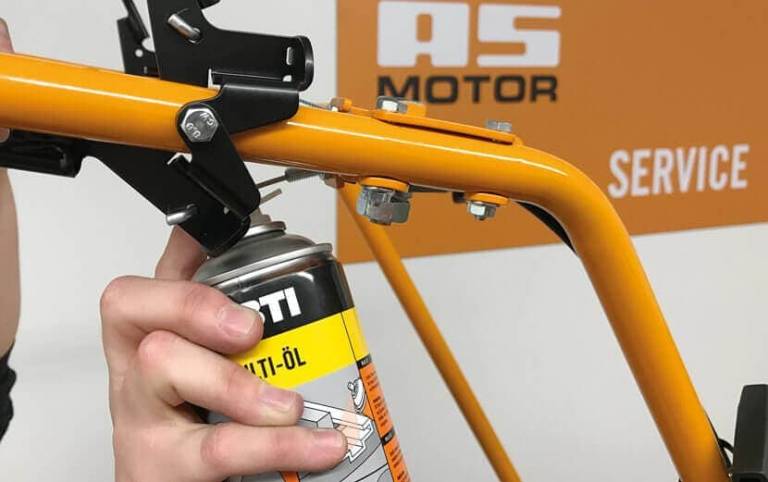
Are there any bent or damaged parts? Is there any corrosion? Are all cables and wires still tight? Are there any cracks, breaks or signs of wear? Are the Bowden cables adjusted correctly? Moving cables such as shift or brake cables should be checked for corrosion and cracks, including individual strands. Moving parts must be lubricated regularly and according to instructions. If damage or defects are noticed during inspection, it is recommended to go to a specialist dealer.

Wheels and blades

During the month-long winter break, air-filled tires lose some of their pressure. Therefore, before mowing for the first time, they should be inflated to the recommended air pressure, if necessary. Wheels, like all moving parts, should be lubricated at the wheel hub. Blades must be tightly seated and free of damage, e.g., deformation, chipping, wear beyond the wear indicators, worn or pitted blades. If they are blunt or damaged, for safety reasons the rule is: Hands off. The specialist dealer not only repairs or sharpens the blades, he also has the necessary equipment for balancing them.

Refueling

Before refueling, check whether there is any fuel left in the tank from the previous season. If there is still some fuel left in the tank, it should first be completely emptied, including the carburetor. This is because old fuel can gum up and clog the carburetor and fuel lines. To empty the carburetor completely, start the engine, turn off the fuel tap, and let it idle until the unit shuts off on its own.

Now add fresh, new fuel. Normal gasoline fuel ages already after 30 days. Special additives can extend the shelf life over the winter. Gasoline and especially 2-stroke mixtures should not be older than three months. Otherwise, there is a risk of power loss or even engine damage in the case of 2-stroke engines. Commercially available special fuels generally have a longer shelf life.

Checking regularly - and early in spring

Regular checks help maintain a mower’s performance over time. High-performance and high-grass mowers in particular can run for many or even hundreds of hours in a mowing season, and almost always under full load. Accordingly, they require even more careful maintenance and inspection than smaller mowers with less operating time. For those who want to have the check done by the dealer, AS-Motor recommends making an appointment early so that the mower is ready for use in time for the mowing season. A nationwide network of qualified dealers can be found via the dealer locator on the AS-Motor website: https://www.as-motor.com/company/service/dealer-search/

Checklist before the first start-up:

  • Spark plug connector plugged in
  • Tire pressure adjusted
  • Fuel filled up
  • Moving parts lubricated
  • Complete unit visually inspected for damage or defects

Expert knowledge on all aspects of maintenance and service

Detailed instructions for cleaning and maintenance of body, frame and mower deck – Fit for the coming season Part 1

Detailed instructions for cleaning and maintenance of engine and electrical system – Fit for the coming season Part 2


Combating giant hogweed with AS-Motor’s remote-controlled ride-on mower AS 940 Sherpa 4WD RC

Controlling giant hogweed is a major challenge. Due to its rapid proliferation, the plant endangers native vegetation while skin contact with giant hogweed can cause photo-toxic reactions and thus severe skin burns. AS-Motor’s remote-controlled AS 940 Sherpa 4WD RC allows users to combat giant hogweed populations safely and efficiently.

Giant hogweed, a health hazard and an ecological threat

Giant hogweed’s various species (Heracleum mantegazzianum, Heracleum sosnowskyi, Heracleum persicum) originate in the Caucasus, Turkey, Iran and Iraq. Giant hogweed was introduced to Europe in the 19th century as an ornamental crop and has now spread over most of the continent. Giant hogweed stores nutrients in tap roots and forms flowers and seeds as soon as sufficient reserves are present. The single flowering, herbaceous plant usually blooms in its third to fifth year of life, which in Central Europe occurs between June and July. The plant’s numerous individual flowers form a cone with up to 50,000 highly germinating seeds, making the giant hogweed’s reproduction potential enormous. After flowering, the plant dies and its seeds are spread by wind, water and human beings. The seeds are ready to germinate after flowering in spring and remain germinable for up to 10 years.

While all parts of the plant are toxic, the clear, aqueous sap from inside the plant contains photo-sensitizing substances (furanocoumarins) that, in combination with UV radiation, can cause severe skin burns (phytophotodermatitis) in humans. Native vegetation suffers in biodiversity and biodensity from the giant hogweed as these plants are forced to compete for light and water with an herbaceous perennial that grows up to 4 meters high. Giant hogweed populations can also cause erosion damage in shore zones as their roots do not have a shore-stabilising function.

Remote-controlled mower for optimal user safety

Various control measures are used to combat giant hogweed and to prevent its further proliferation. Manual and mechanical measures include the use of herbicides and grazing, or cutting off the root and thus the vegetation cone, which causes the plant to die. Other control measures include removing the umbels, digging out the plant and mowing with a trimmer or lawn mower. In all the above, however, the user is in direct contact with the plant and therefore exposed to a high health risk.

AS-Motor offers a remote-controlled ride-on mower to safely combat giant hogweed populations. The AS 940 Sherpa 4WD RC can be conveniently and precisely operated from outside the danger area via a professional remote-control unit with a range of up to 300 meters. A low centre of gravity and optimal propulsion qualify the device for mulching on difficult and steep terrain. The AS 940 Sherpa 4WD RC offers additional user protection thanks to its closed mowing deck.

Combating large populations of giant hogweed

Digging out individual giant hogweed plants or cutting their roots is a time-intensive process, making mulching the most efficient measure for large populations. In the first year of control, cutting should occur shortly before flowering when the plant can be weakened the most. If the plant grows high, which is usually the case, it is advisable to first clear the plants at a high cutting level and then mow a second time on the level closest to the ground. After this first mowing, regular mulching during the entire vegetation period is necessary since the plant grows back. As the plant can bear blossoms and form seeds starting from a height of 10 cm, mowing is necessary approximately every ten days depending on the weather. From the second year of control onward, mowing should take place as early as possible in the growing season and be repeated regularly at intervals of approximately ten days. Mulching withdraws energy from the plant until it finally dies. Overall, it may be necessary to repeat this procedure for up to ten years. The area must be checked regularly to ensure that all plants are dead and that seeds are no longer germinable.

Combating small populations of giant hogweed


Control procedures may differ for smaller populations:

  • It is advisable to mulch the plant first
  • then cut the root 15 cm below the ground, with a spade for example
  • the surface should then be covered with a black tarp to suppress seed germination. Nevertheless, regular inspection of the area is required in order to control seedlings
  • Cleaning of the machine with appropriate protective clothing (see below)

Cleaning of the machine to protect the user

Appropriate protective clothing is essential even if the user operates the remote-controlled mower from a safe distance and is thus protected from direct contact and spraying of plant sap. In this case protective clothing means a full-body coverall with hood, protective goggles, rubber gloves and boots. This is especially important for the subsequent cleaning of the machine.

After each use, a thorough cleaning of the machine is necessary. The device should be loaded onto a transport vehicle via remote control. If a person comes into contact with sap on the machine, photo-toxic reactions can occur even some time after use. To clean the machine, it is recommended to apply vinegar cleaner (with not more than 10% acetic acid) while wearing protective clothing and to clean the machine using a strong water jet (not a high-pressure cleaner, particularly due to the increased risk of splashing) and a brush.

The trend is towards high-grass mowing

Cultivated landscapes worldwide have changed significantly in recent decades. Due to structural changes in agriculture, many areas are used more intensively while in some cases peripheral areas are no longer being used at all.

This gives rise to the following trends:

  • Shrubbery/forest cover is increasing, resulting in the reduction of flora and fauna diversity in peripheral areas
  • A dramatic loss of species in intensively-maintained green areas

This merits the following countermeasures:

  • Keep peripheral areas (meadows, orchards, slopes, etc.) open via economically efficient mowing methods
  • Adapt mowing procedures in peripheral areas, i.e., reduce the number of mowings per year and push back the first mowing
  • Adjust the mowing time to accommodate insects and bees – early in the morning with overcast skies or late in the evening are best
  • Create rotational fallow land or leave old grass strips untouched

Rethinking the maintenance of green areas is necessary to protecting biodiversity. Thus high-grass mowing is more than just a trend: it represents a step to protect the environment and, above all, to reduce bee mortality.

Examples of AS-Motor device implementation for environmental protection and nature conservation:

Meadow orchards preserve our ecosystem by functioning as bee pastures, promoting biodiversity. It is thus important that mowing does not occur until flowering (end of June – middle of July). Following this guideline plants in the meadow can quickly grow to a height of 100 cm or higher, terrain ideally suited to AS-Motor’s Allmähers and ride-on mowers.

Cultivation of orchard meadows and other peripheral areas requires mowing only 1-2 times a year, to keep areas free of shrubs and bushes. In this time grass can grow 60-100 cm high, requiring outstanding mulching capabilities. AS-Motor devices have been engineered precisely for this purpose.

Other advantages of high-grass mowing with AS-Motor machines:

Reducing the number of mowings per year not only makes sense for environmental reasons, but also offers economic advantages by minimising time, personnel expenditure, and operating costs such as fuel and wear parts. Mulching and uniform cutting placement also eliminates the need for cost-intensive removal.

Naturally, extensive care with only 1-2 mowings per season also translates to significantly lower emissions in the form of exhaust gas and noise.

Fit into hibernation - Prepare for the coming season - Part 2

In autumn, lawnmowers, ride-on mowers and countless other garden tools can shift down a gear. Most of the work is done and there is more time to take care of maintenance, repairs and servicing.

The second part of our Winter Check-up series focuses on the engine, the electrical system and tyres. We asked the engine expert Wolfgang Gerlach from AS-Motor what needs to be considered.

Wellness for the engine

The good news for all owners of electric or battery mowers is that electric motors are normally maintenance-free. Only occasionally do air filters need be cleaned.

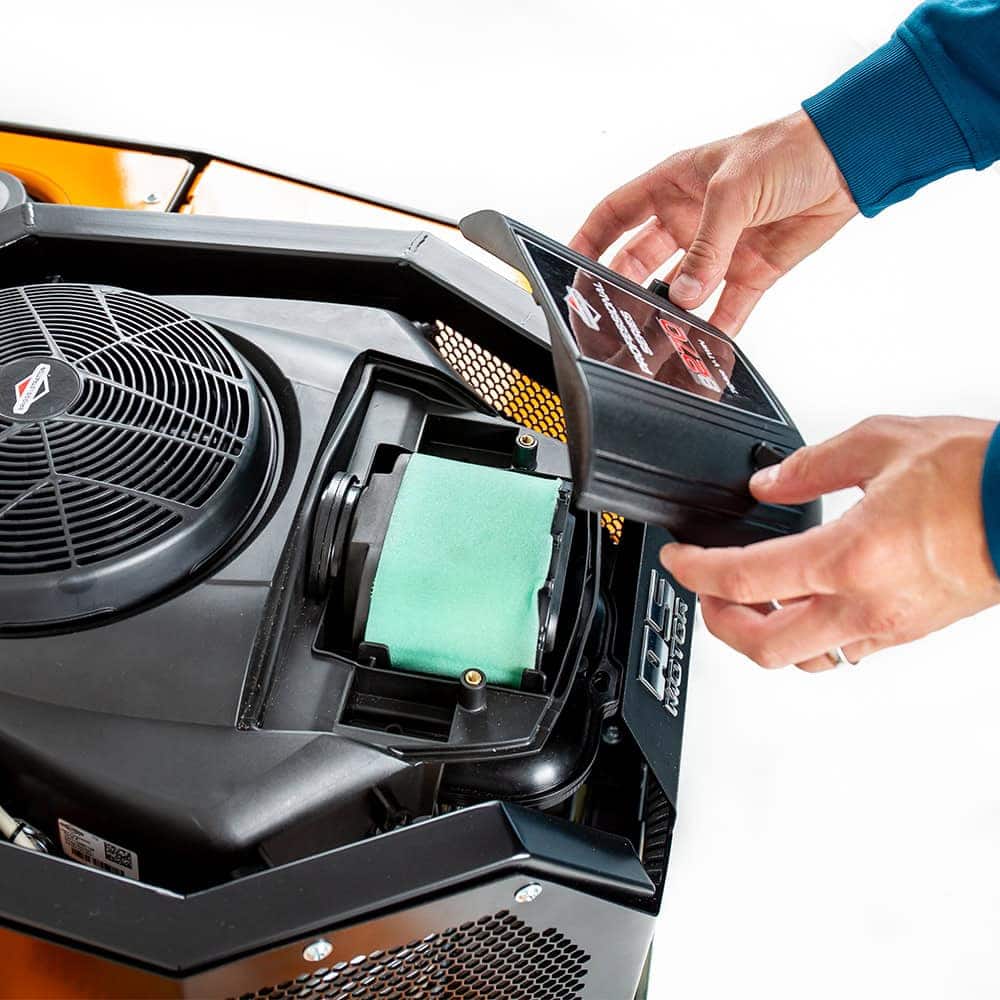
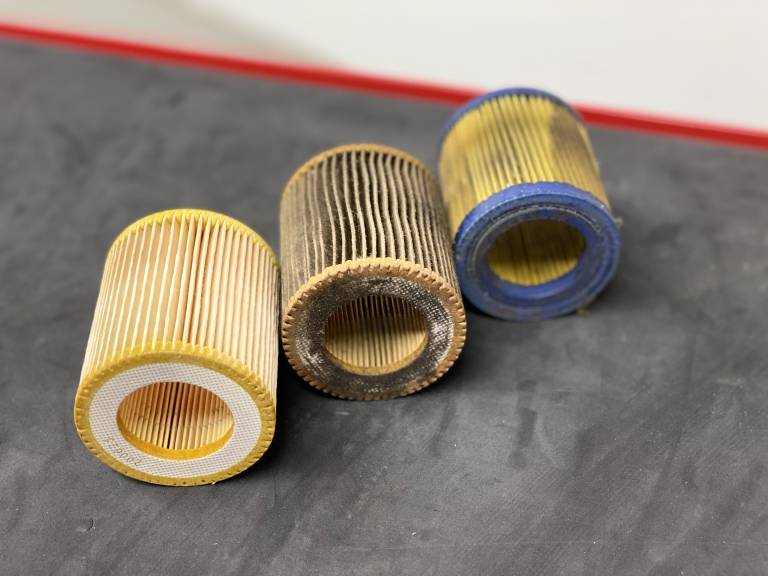
In the case of internal combustion engines, on the other hand, a number of points need to be worked through. We start with the air filter. This is removed and then checked for impurities. Dry dust, plant seeds and foreign objects can be removed by light tapping. Damaged, heavily soiled, or oil- and petrol-contaminated filters must be replaced. Our AS-Motor expert points out that when replacing a filter, you should always use original parts from the manufacturer. You can recognize AS-Motor filters, for example, from the logo on the filter. Unfortunately, there are many inferior copies available at the moment. Engine damage caused by copied filters is becoming more and more common. In addition, the dryness of the last few years has considerably increased the motors’ dust load. Therefore, it is advised to shorten one’s interval of inspecting air filters during the current season.

If the machine’s engine has run properly before the winter break, there is no need to unscrew and clean the spark plug. In this case, one must only be attentive to malfunctions and the engine manufacturer’s next prescribed service interval.

Engine damage caused by inferior copies is unfortunately not uncommon. The picture shows a new original air filter, a dirty original air filter and a cheap copy (from left)

Empty carburettor and tank

You must clean the carburettor carefully from the outside. Make sure that you do not damage any tension springs or loosen any screws. For 4-stroke engines the carburettor should also emptied before storage. To do this, close the fuel tap, start the engine and allow it to drain by letting the engine run until it stops by itself. There will still fuel left in the fuel filter and the fuel line, but the carburettor will be almost completely empty. Some carburettors also have a drain plug for the remaining fuel. Use this, if available.

Try to empty the petrol tank as much as possible during the last mowing. In the spring, fill up with fresh fuel. Machines with metal tanks are better equipped to avoid corrosion and condensation.

For machines with 2-stroke engines (except chainsaws and brush-cutters) the carburettor must also be emptied for storage. Proceed here as with a 4-stroke engine. It is also advisable to empty the fuel tank afterwards, as the 2-stroke mixture could segregate over the winter and cause engine damage in spring. Leave the fuel tank ventilation open. However, the fuel tap should remain closed. Otherwise the tank could dent or expand due to temperature differences. Basically, the following applies to 2-stroke mixtures: Only use fully synthetic 2-stroke oils. Mineral oils have become obsolete.

Our engine expert also points out that the oil in the fuel mixture of 2-stroke engines may stick to the fuel filter during the winter period and recommends: “Buy your 2-stroke mower a new fuel filter in the spring. This costs little and prevents starting problems and uneven engine running.”

Winterise batteries properly

Regarding the electrical system, one should first visually inspect the cables, the wiring harness, the plugs, the covers and the cable fastenings.

Please note the following in regards to the batteries. Maintenance-free wet and gel batteries are used in ride-on mowers today. Maintenance-free means that no acid or water needs to be refilled. It does not mean, however, that the battery does not need to be regularly charged when not in use and thus maintained. Once a battery is deeply discharged, it will suffer permanent damage. Therefore, if there is a risk of frost during storage, it is recommended that the battery be removed and stored in a dry place at 15 to 18° Celsius. The same applies to Li-Ion batteries. The batteries of ride-on mowers should also be charged at least once a month. So-called continuous maintenance chargers with intelligent electronics are particularly helpful for this. These are already available for around 20 euros in car accessory shops. Li-Ion batteries should be stored with a charge level of about 50 percent. In principle, batteries must be stored in a fireproof place, e.g. in a steel cabinet or metal box. Damaged Li-Ion batteries in particular pose an increased fire risk.

Clean cooling and sufficient oil

The petrol engines of ride-on mowers and combustion lawnmowers are usually air-cooled. The cooling air intake’s ventilation grid must be cleaned during the winter check-up. Also check, if possible, that the cooling fins of the engine are clean and the air baffles intact. However, cleaning and full inspection can only be carried out by a specialist dealer, as the cooling system is fitted with motor covers. Remember that dirty cooling fins can cause the motor to overheat.

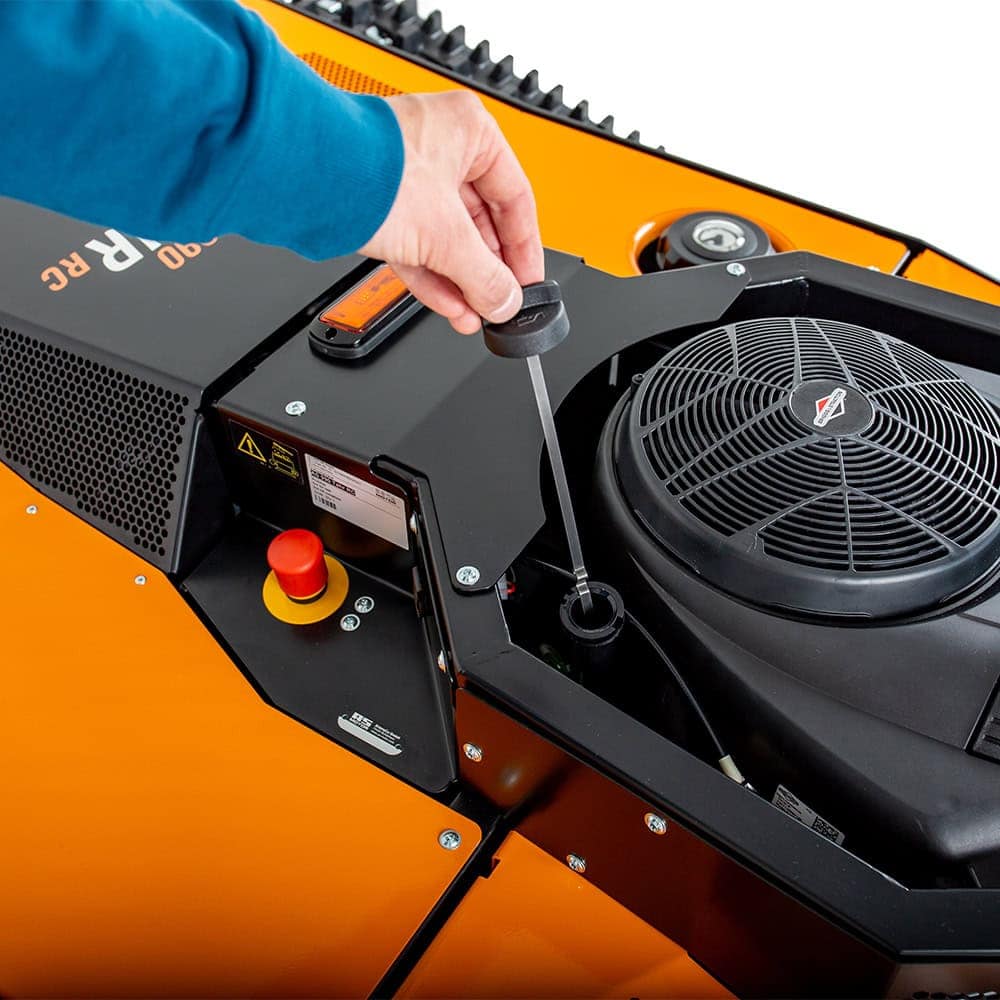
For 4-stroke engines, check the oil level with the dipstick. If there is any oil missing, top up with the required amount up to the maximum mark. Make sure to observe the oil change and oil filter service intervals for the engine, the hydrostat and if necessary, the gearbox. This check is not necessary for 2-stroke engines as they do not contain engine oil.

For 4-stroke engines the oil level must be checked and, if necessary, missing oil topped up.

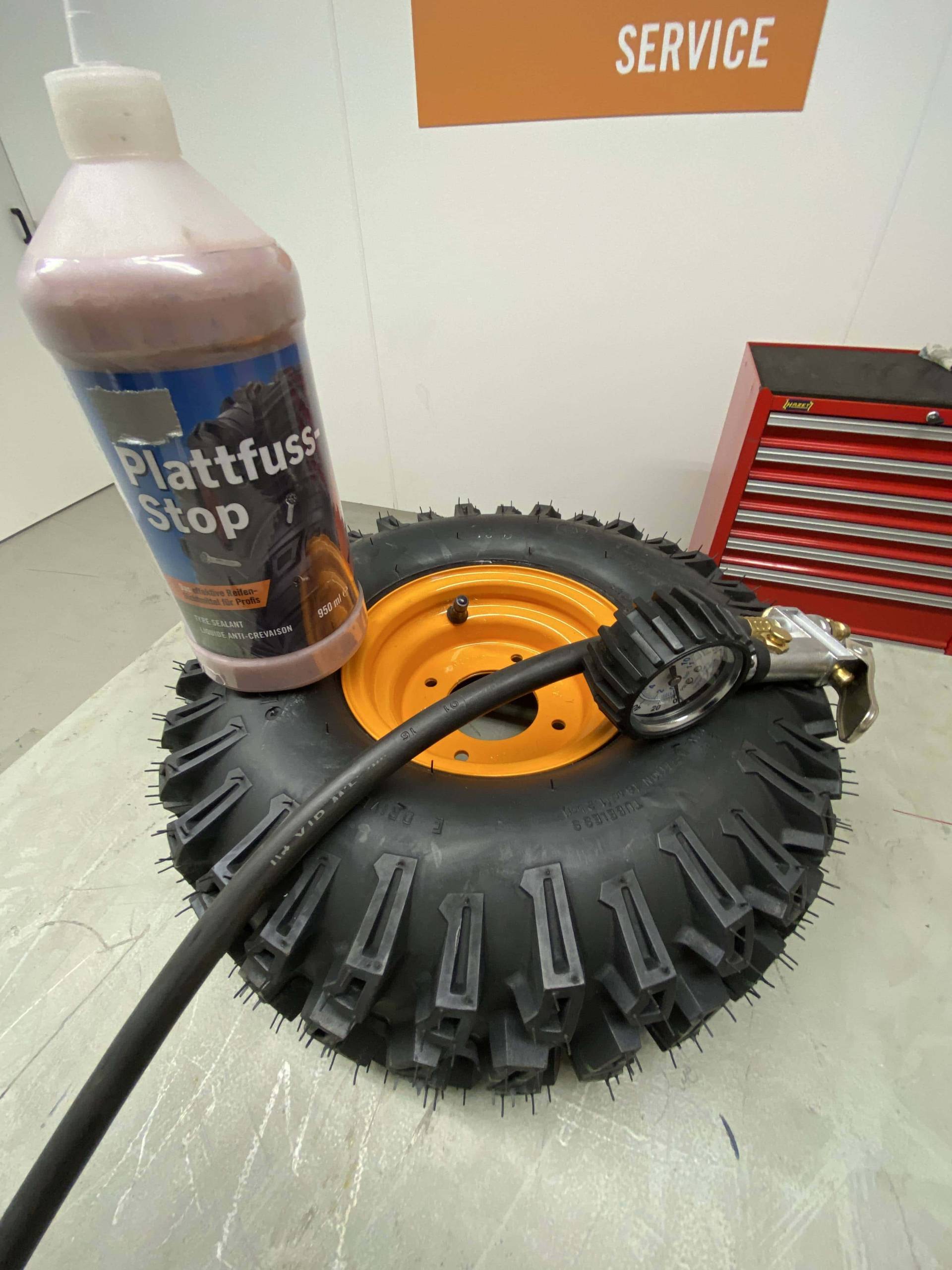
It is worthwhile to fill in a tyre sealant, especially for tubeless tyres. Downtimes are thus significantly reduced

The right pressure in the tyre

Ride-on mowers and garden tools travel at low speeds. It is not necessary to jack up the machines to avoid standing dents on the tyres. A few maintenance and control measures do make sense, however. Inflate the tyres to slightly higher operating pressure. Then the tyres should be checked for cracks, cuts, porosity, spikes and dents. You should also check whether any foreign bodies are between the rim flange and the tyre, and whether the wheel bolts are tight. In the case of tubular tyres, it is also necessary to check whether the valve is straight or has shifted. If necessary, the air must be deflated and the casing aligned, otherwise there is a risk of the valve shearing off.

As with every tyre, but especially with tubeless tyres, it is worth considering a tyre sealant. This greatly reduces downtimes as tyres can function even with many thorns stuck in the tyre. Tyres with sealant can lose some of their pressure if left standing for a long time. This is normal, as the sealant is distributed and can only work to its full effect when the tyre is driven regularly. Simply inflate these tyres again in spring and drive a few metres. Shortly before the start of the season, check again whether all tyres are still inflated or whether there are any “sneakers”. In this way you can avoid a negative experience at the beginning of the new season.

The new season can come!

Now your machines are ready for hibernation. They should be ready for use immediately at the start of the coming mowing season, without any annoying surprises, provided that you have written down any defects discovered during the check-up and had them corrected or repaired. Take advantage of the quieter winter months at your specialist dealer to have necessary repairs carried out in peace. Please always entrust work on blades and safety components to a specialist. We wish you happy working and good mowing in the next season.