AS-Motor offers solutions for meadow orchards
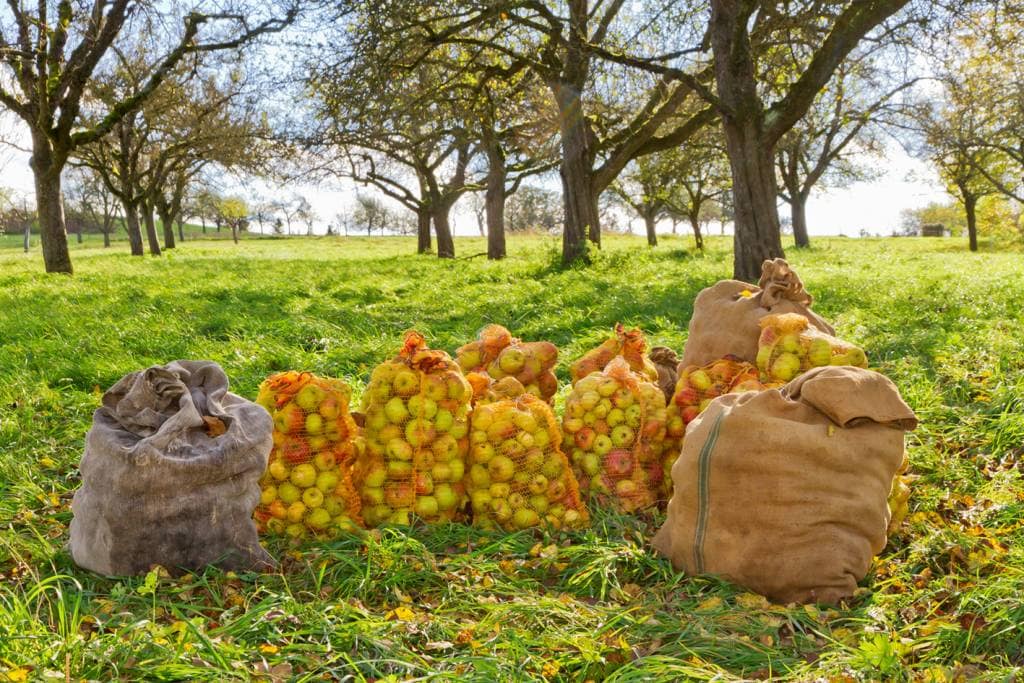
Our expertise in rough terrain and slope mowing makes AS-Motor the equipment of choice for use in meadow orchards.
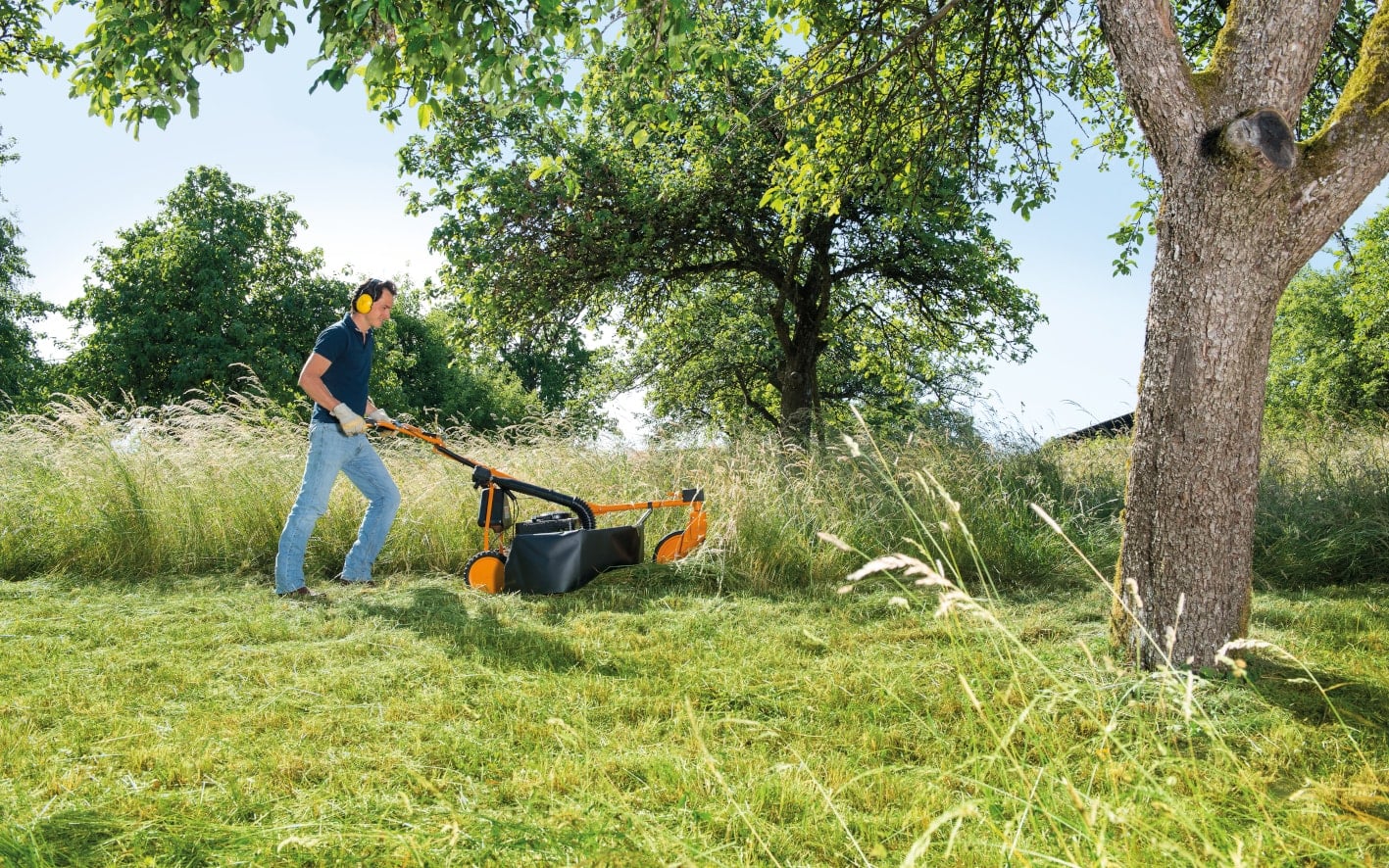
To preserve the flora and fauna native to certain regions, meadow orchards are typically mowed at longer intervals: once in spring and once in autumn. AS-Motor’s mulching mowers excel at clearing thick growth and high grass, while AS-Motor’s 2-stroke powered machines are ideally suited for maintaining steep areas surrounding the orchards.
Application examples
High grass mowing
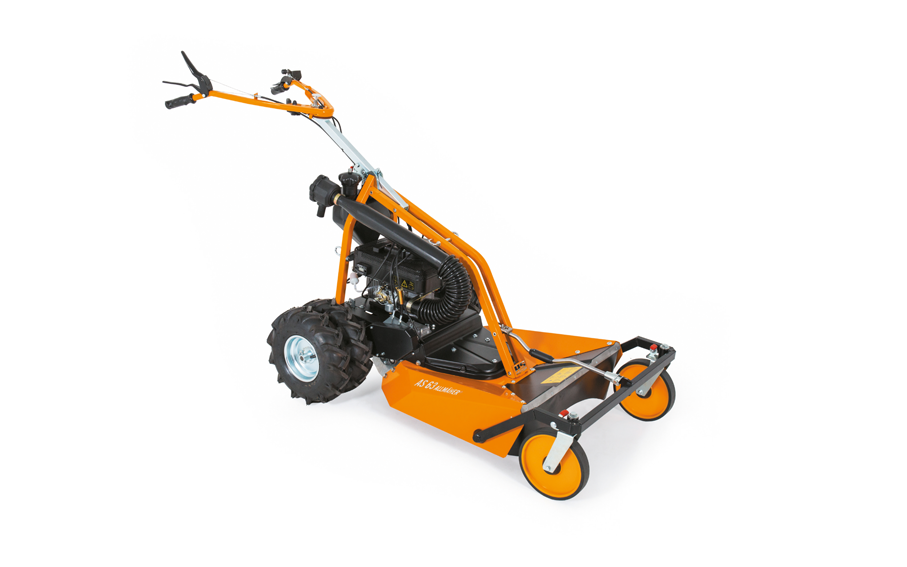
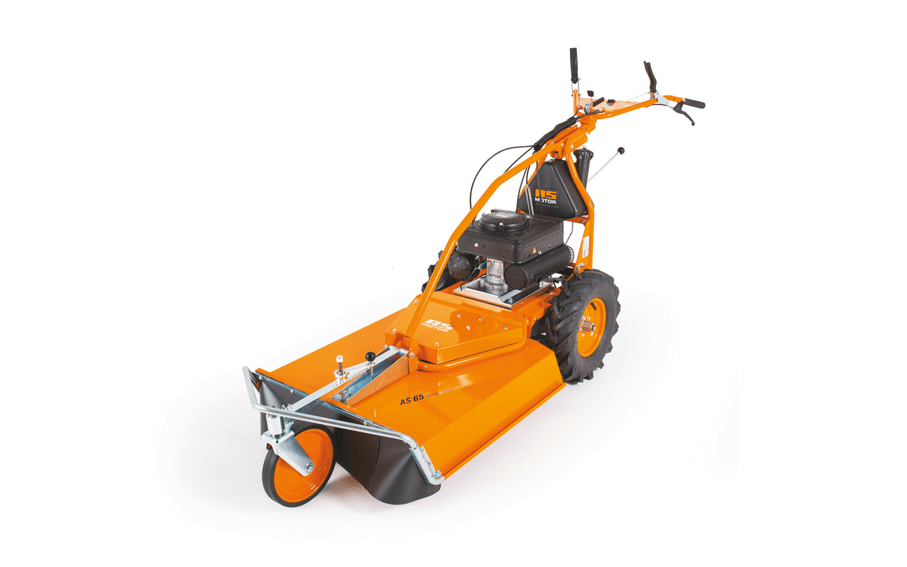
AS-Motor offers several high grass mowing solutions depending on the cutting force required. A high performance engine is recommended for meadow orchards that will only be mowed once per year. AS-Motor’s smaller machines are suitable for meadows that will be mowed several times per year.
Slopes
Only certain engines are suitable for mowing on slopes. Standard 4-stroke engines can handle inclines below 20 degrees, while specialized 4-stroke engines can work on slightly higher inclines. The best solution for slopes, however, is the AS 165 ES 2-stroke engine which can power a mower safely up inclines that exceed 45 degrees.
High grass mulching
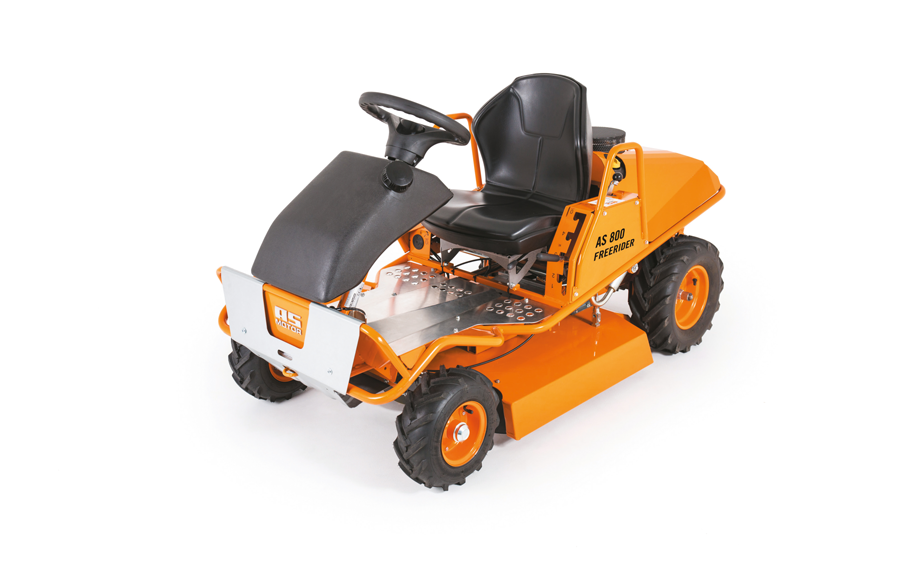
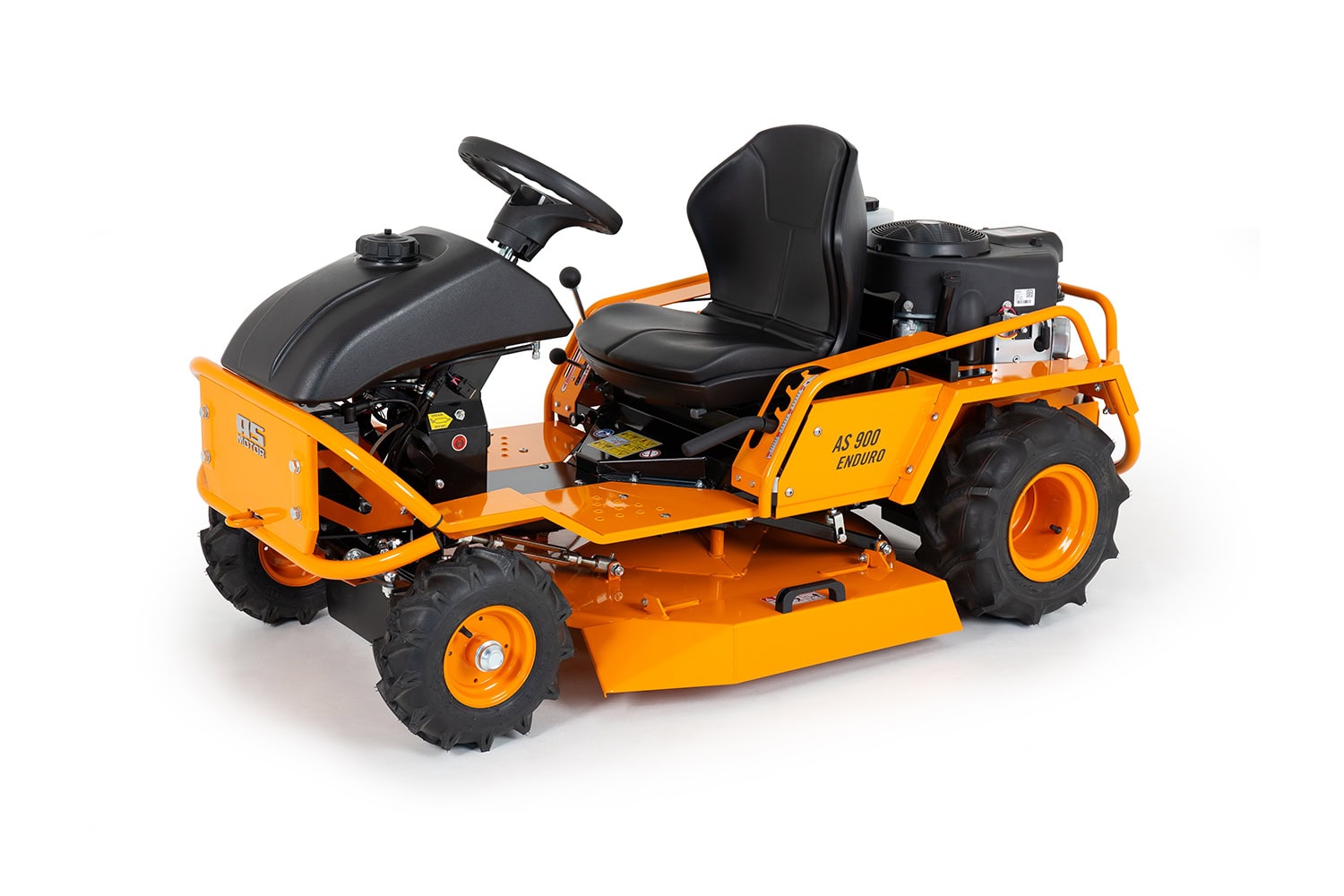
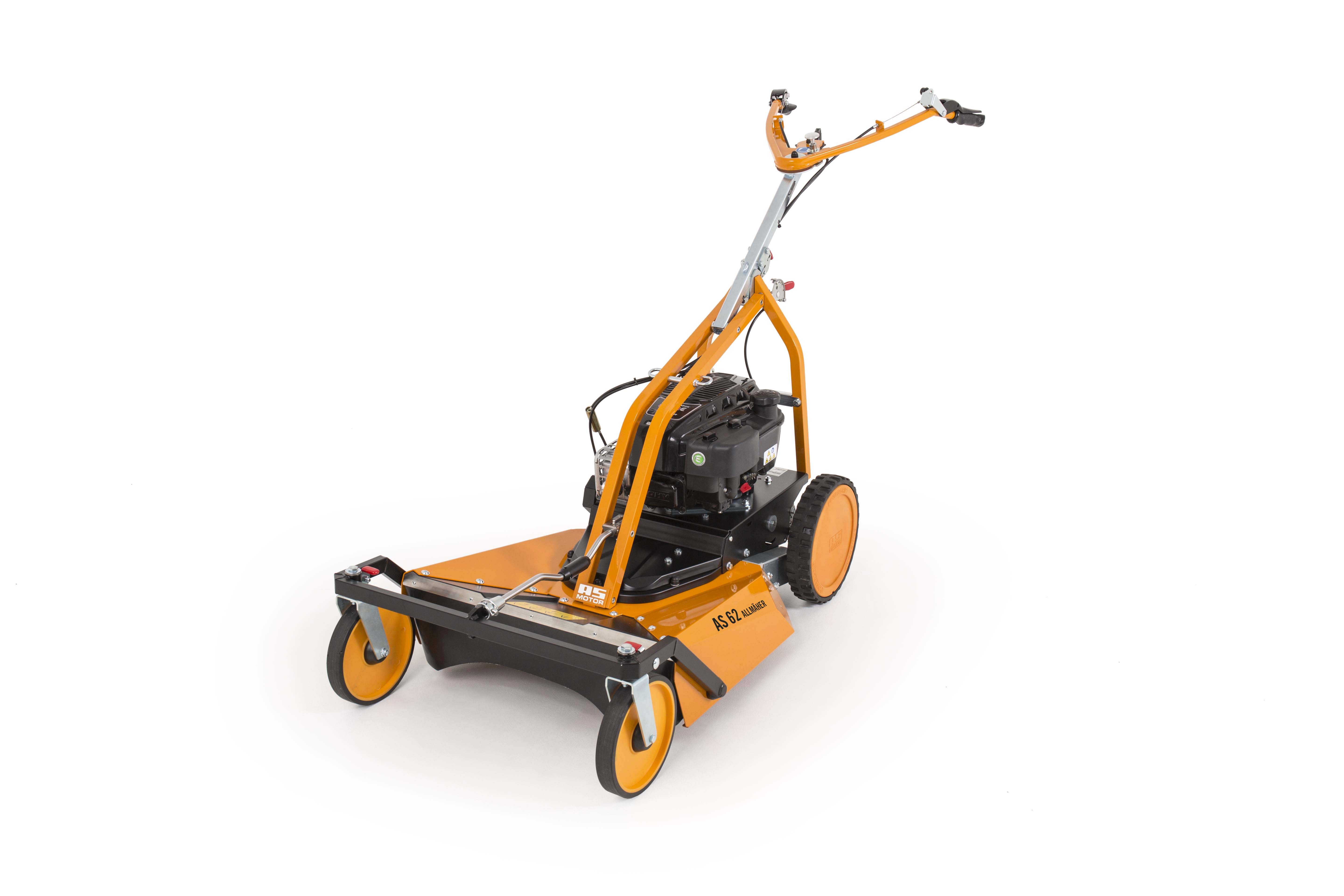
AS-Motor Allmähers and ride-on mowers are often equipped with special cross-blades and closed mulching mower decks that cut grass several times and generate a fine, uniform layer of mulch that then decomposes as natural fertiliser. This process eliminates the risk of rotten areas in the orchard.
Mowing dense growth
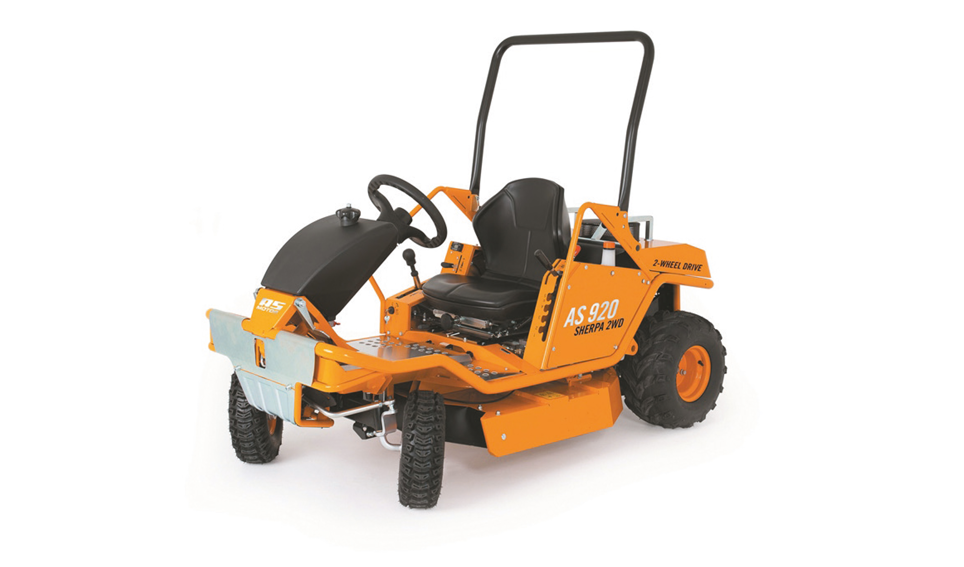
Dense growth and fast-growing saplings can quickly encroach onto meadow orchards. AS-Motor’s Allmähers easily tackle dense growth, while AS flail mowers and the AS Sherpa deliver more robust cutting performance.

Even my grandmother had an AS mower, which at the time was still red and white and had a front wheel with spokes that looked like a bicycle. And my parents had orchards and vineyards... which could only be mowed a scythe or an AS mower.

With our AS 73 4T Allmäher we mow our meadow orchards more than three times faster than we did with a brush-cutter.
You cannot tell whether a mower mulches effectively or poorly until after two weeks; at that point, you can see if there are a just few spots or many rotten sections on the mowed area.
I would have never believed that the AS 63 2T could mow this embankment with a 38 degree incline, but it does.
Categories
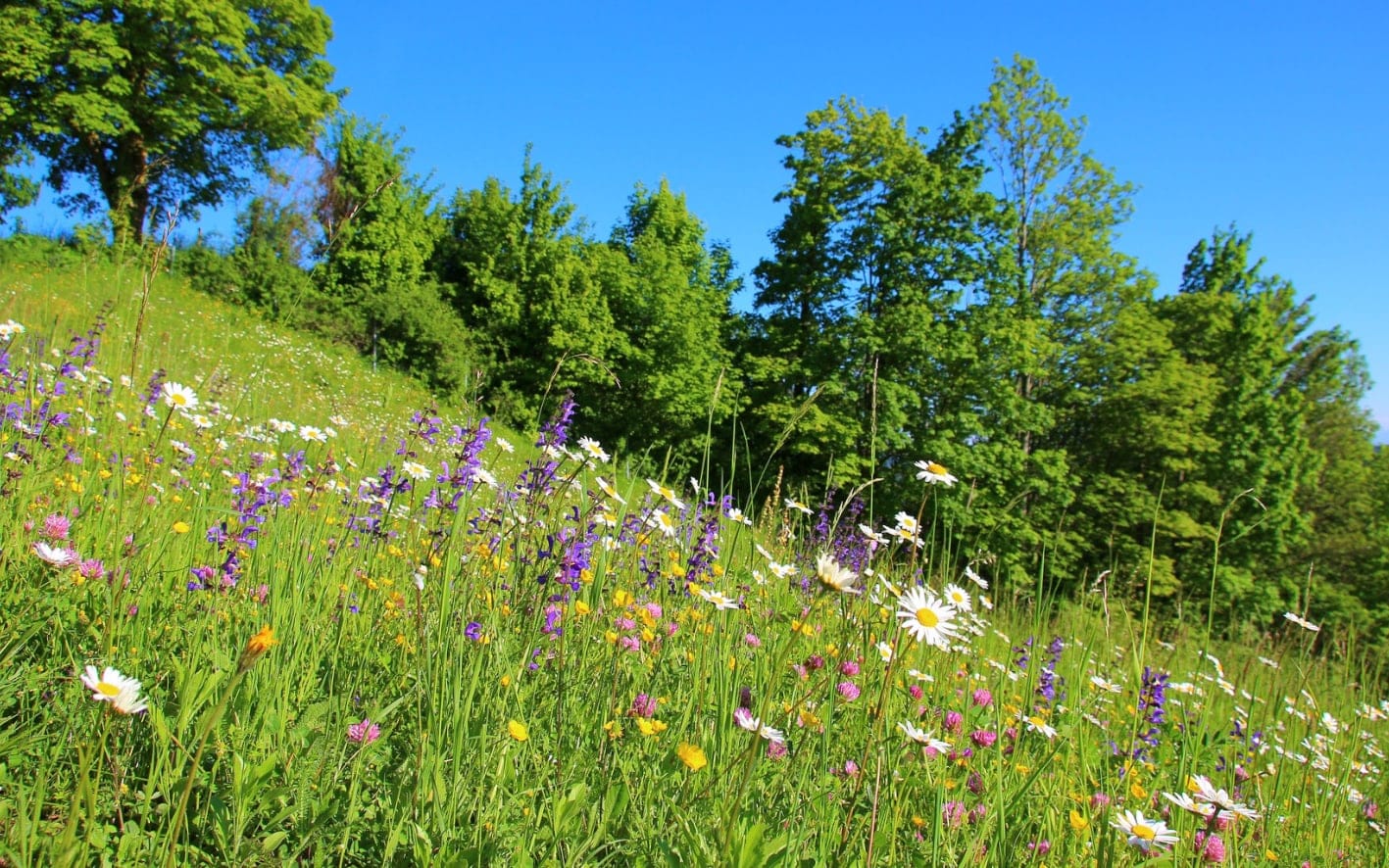
Flower meadows
Flower meadows are structurally rich habitats that are extremely important for insects, wild bees, and species that depend on flowers. The key is not to mow frequently, but to cut at the right time. Before the flowering phase, the vegetation can quickly reach heights of 30–40 cm. After that, maintenance is carried out at longer intervals, usually once or twice a year.
This form of extensive use requires machines that can safely cut tall, heterogeneous vegetation without putting unnecessary strain on the area. Clean cuts, controlled deposition, and an adapted driving style are essential for preserving plant populations and enabling regeneration.
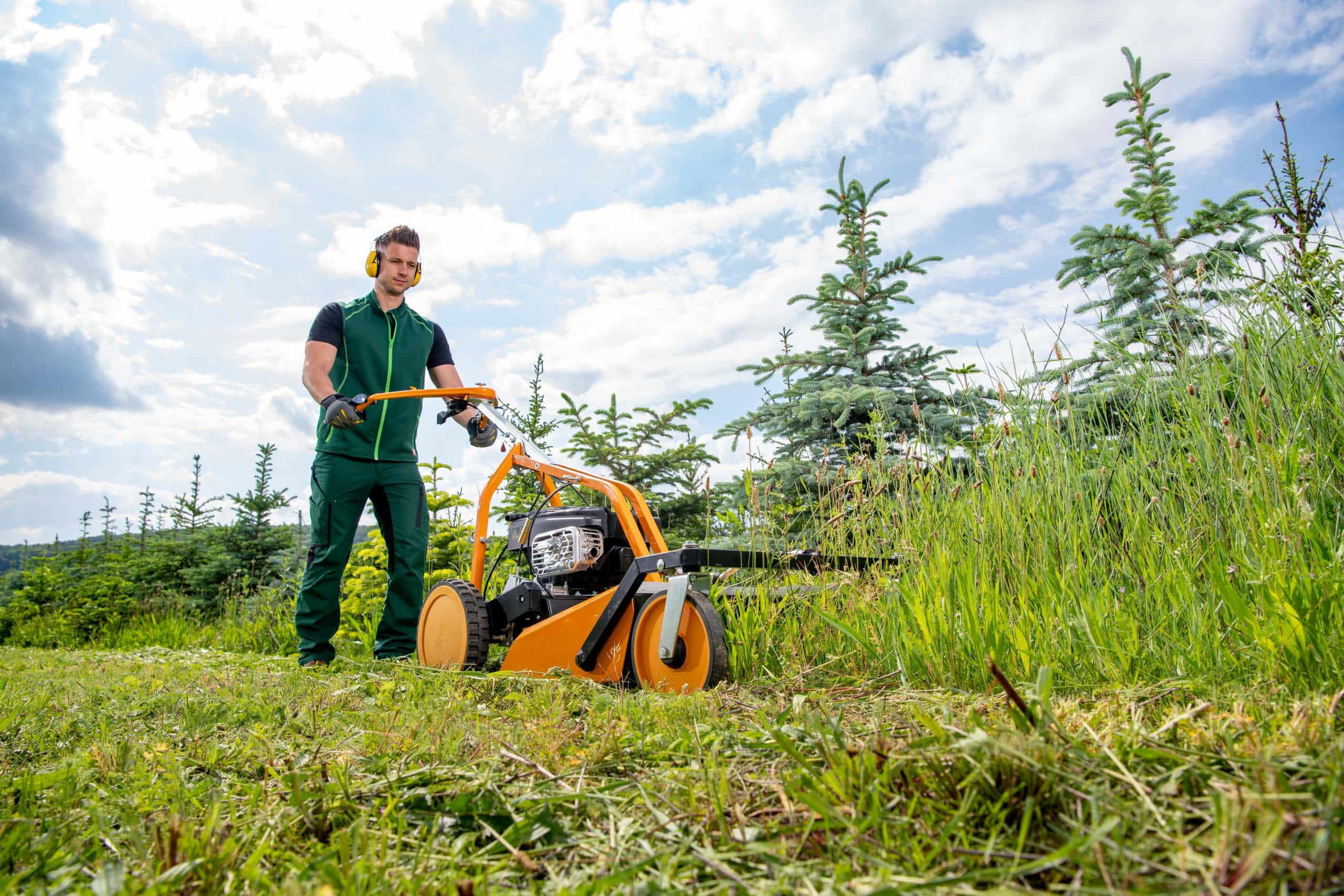
High meadow grass
Extensively used meadows such as orchards, compensation areas, or roadside greenery are deliberately mowed only once or twice a year. The vegetation reaches heights of 60 to over 100 cm and forms dense, structurally rich stands.
This form of maintenance serves to keep the area open and suppress woody plants, not to maintain the lawn. Machines with high throughput, uniform cutting performance, and controlled deposition of the cut material are required. This is the only way to efficiently manage large amounts of biomass without overloading the area or damaging the soil and vegetation.

Mulching
Mulching is a process by which grass cuttings are shredded several times into a fine mulch, which then remains on the surface as natural fertiliser. Special mulching blades with a double cutting plane and a circular mulching unit are used on ornamental lawns, while cross-blade systems or flail mowers are primarily used in high grass.
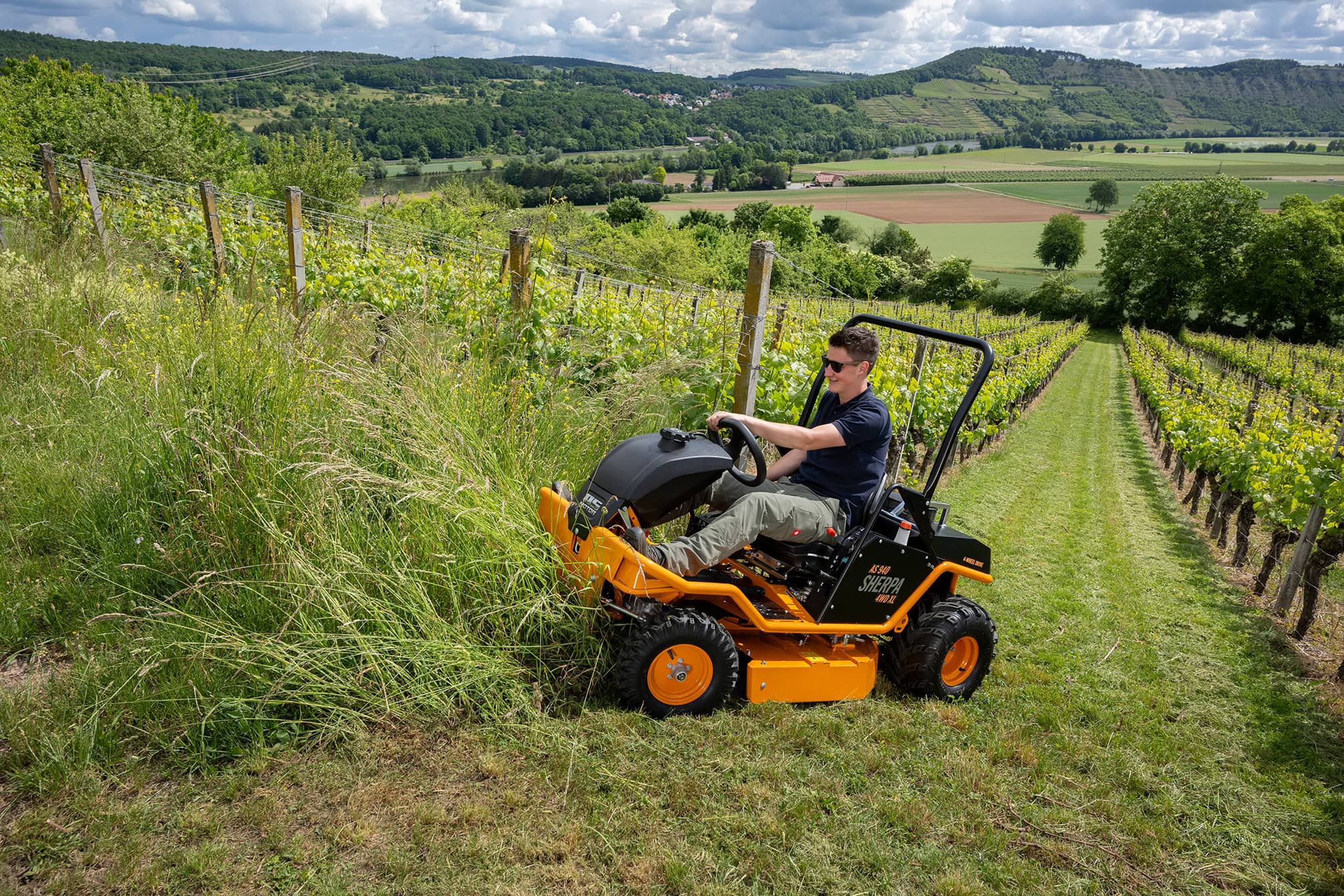
Slopes
AS-Motor engineers machines with high ground clearance, steep ramp angles, low overall weight, optimal weight distribution and a low centre of gravity to perform on slopes.
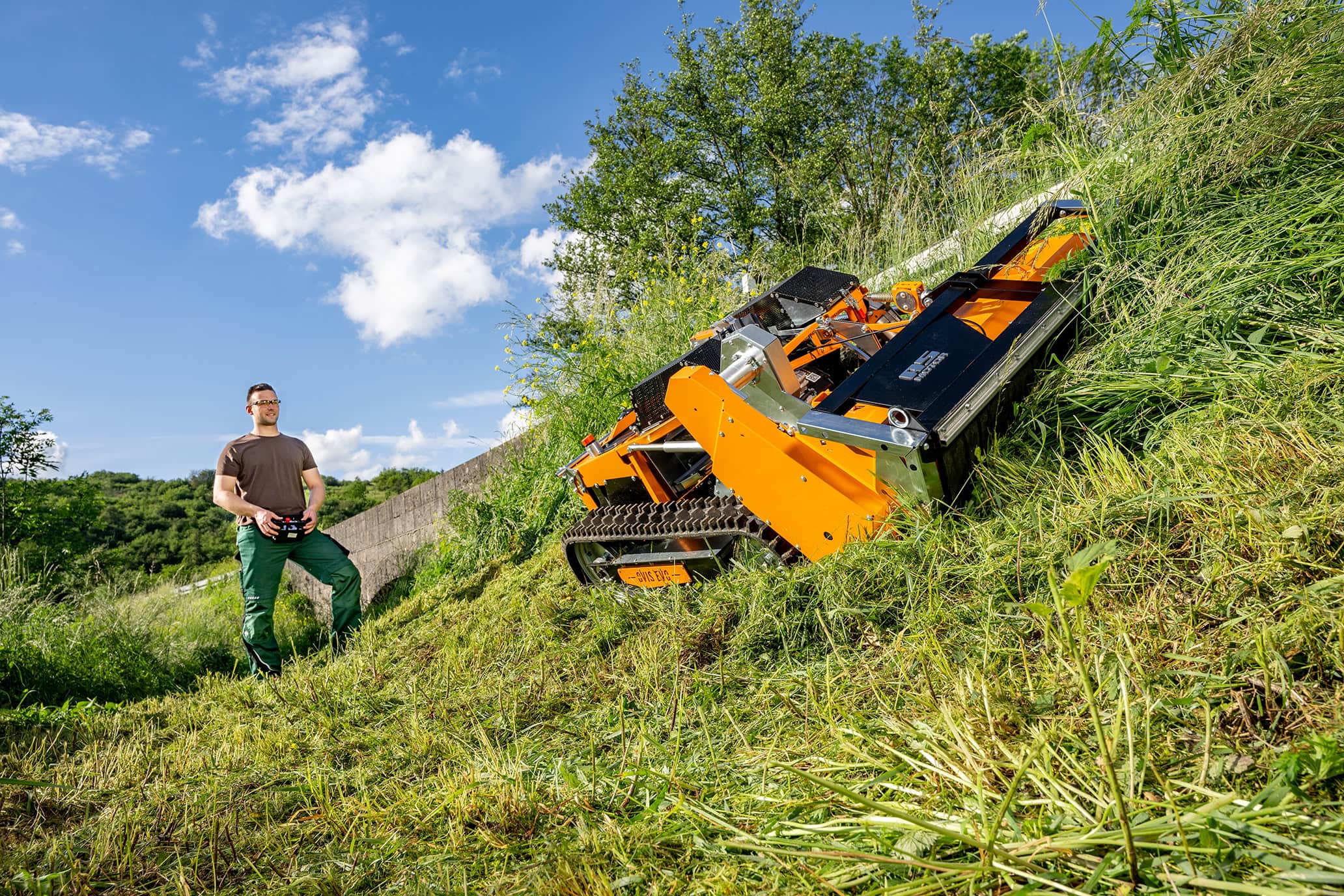
Uneven terrain
Animal burrows, anthills, mole hills and water channels cause uneven terrain. Several AS-Motor machines have high ground clearance, all-wheel drive and limited slip differential, along with appropriately studded field tyres, for uneven terrain.
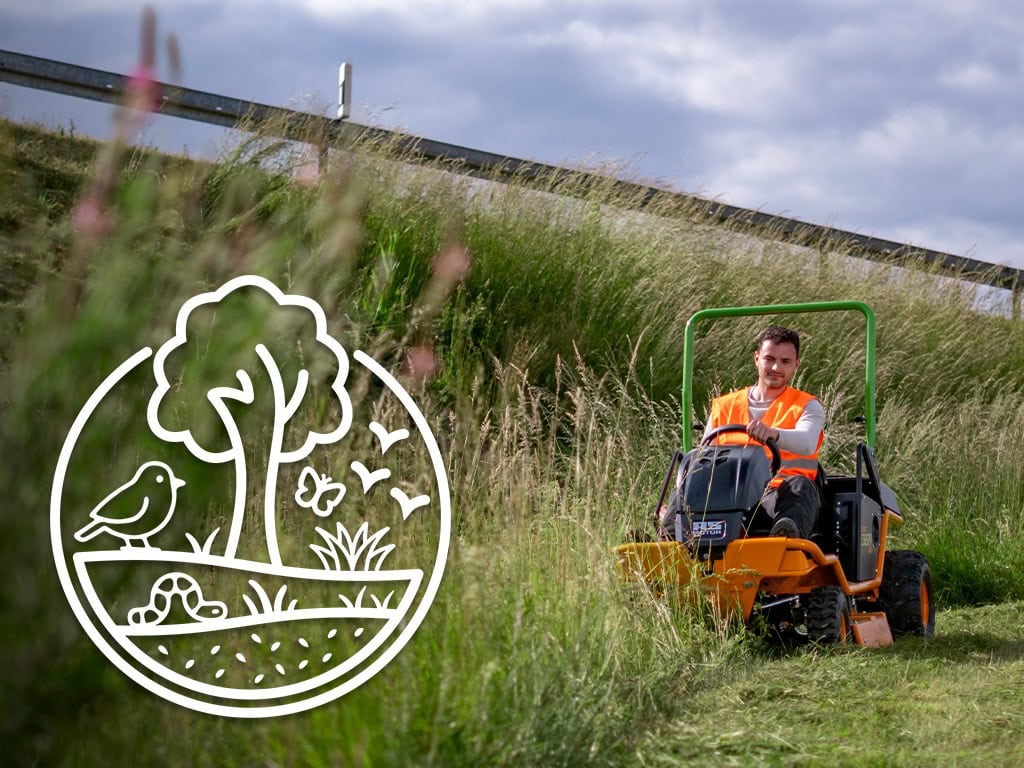
Ecological mowing & extensive land management
Ecological mowing and extensive land management focus on reduced, targeted interventions instead of blanket mowing. Cutting heights, timing, and maintenance intervals are based on vegetation development and site conditions, not on maximum area coverage.
Sub-areas are mowed on a rotating basis, while others are deliberately left untouched. This creates varying growth heights, refuges, and stable structures on extensive meadows, compensation areas, municipal green spaces, and in landscape management. Technology is used for control, not intensification.